
Laser Skin Treatment for Acne Scars – Healthy, clear, and kind of youthful looking skin is a goal for a lot of people. Still, real-life issues like acne scars pigmentation, sun damage -uneven skin tone, plus fine lines, and wrinkles, can really mess with both your look, and your self-confidence.
Even though regular skincare products, can help with mild skin concerns, more deeper problems tend to ask for advanced dermatological care instead. Laser skin treatment is one of the most used, and effective cosmetic dermatology procedures for improving overall skin texture, easing pigmentation, helping with acne scars, and supporting skin rejuvenation.
In this article, you’ll learn how laser skin treatment works, what benefits people usually notice, which conditions are most common, what treatment options exist, what recovery typically looks like, and a few important aftercare tips you should not skip.Read more.
What Is Laser Skin Treatment?
Laser skin treatment is a non-surgical cosmetic procedure that uses focused beams of light energy to improve the appearance, and health of the skin. Depending on the type of laser used, the treatment can remove damaged skin cells, stimulate collagen production, reduce pigmentation, and improve skin texture.
Different laser technologies are available, and your dermatologist will recommend the most suitable option based on your skin type, skin concerns, and treatment goals.
How Does Laser Skin Treatment Work?
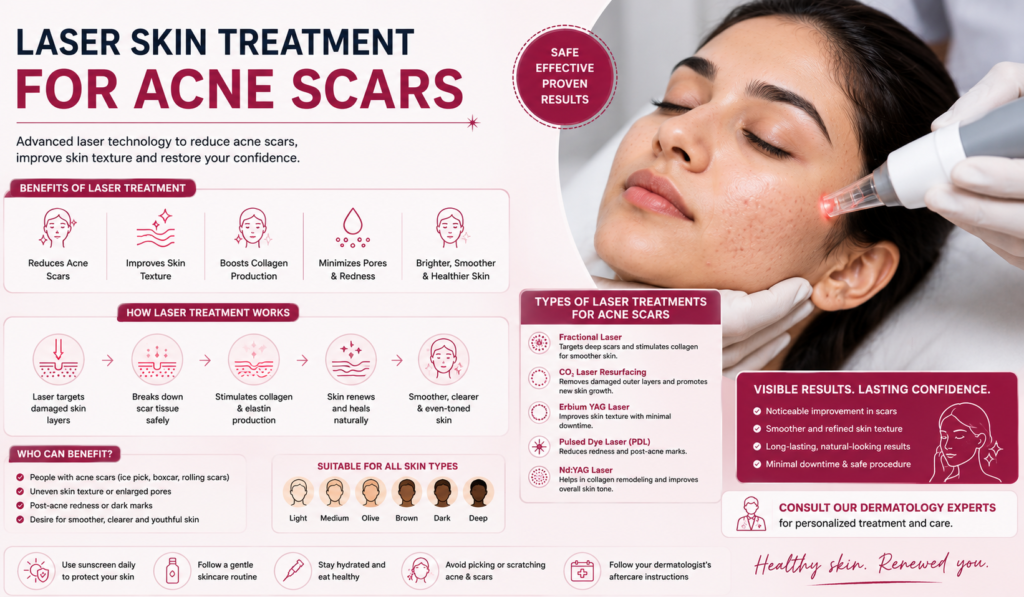
Laser devices emit controlled light energy that penetrates different layers of the skin. The energy targets specific skin structures, such as excess pigment or damaged tissue, while encouraging the body’s natural healing process.
Laser treatment helps to
- Stimulate collagen production
- Promote new skin cell growth
- Reduce excess pigmentation
- Improve skin texture
- Minimize scars
- Tighten the skin
- Enhance overall skin tone
The exact treatment approach varies depending on the type of laser, and the condition being treated.
Skin Concerns Treated with Laser Therapy
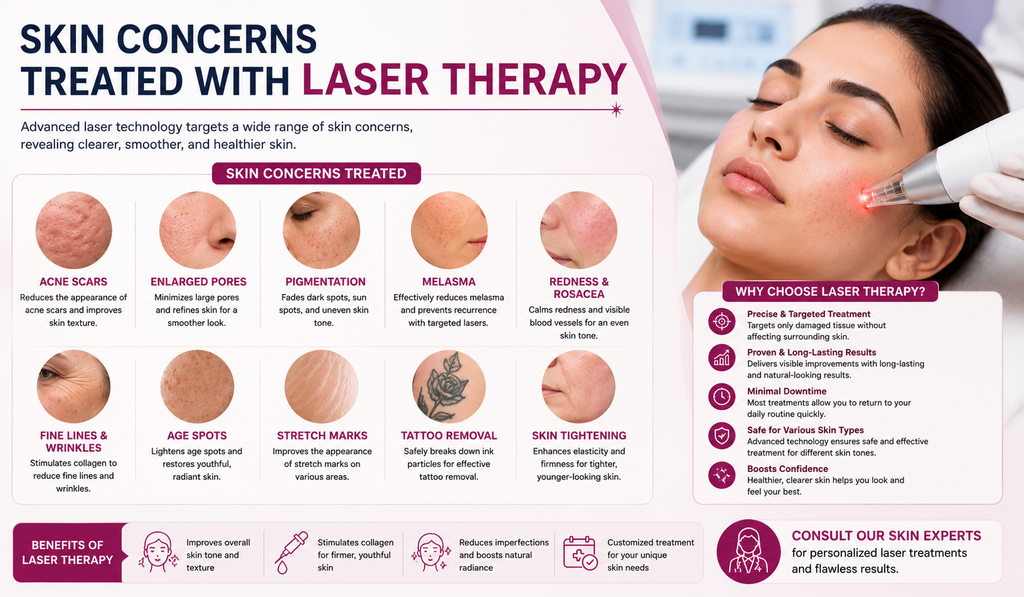
Laser skin treatment is commonly recommended for a wide range of skin concerns.
Acne Scars
Laser therapy can improve the appearance of
- Ice pick scars
- Boxcar scars
- Rolling scars
- Post-acne skin irregularities
By stimulating collagen production, the skin gradually becomes smoother, and more even.
Pigmentation
Laser treatment helps reduce various forms of pigmentation, including
- Sunspots
- Age spots
- Freckles
- Melasma (in selected cases)
- Post-inflammatory hyperpigmentation
Your dermatologist will determine the safest treatment based on your skin type, and the cause of pigmentation.
Skin Rejuvenation
Laser procedures can improve
- Fine lines
- Wrinkles
- Uneven skin texture
- Dull complexion
- Mild skin laxity
- Enlarged pores
Many people choose laser skin rejuvenation to achieve healthier, brighter, and younger-looking skin.
Sun Damage
Years of sun exposure can lead to rough skin, pigmentation, and uneven tone. Laser treatments can improve the appearance of sun-damaged skin, and promote a fresher complexion.
Uneven Skin Tone, and Texture
Laser resurfacing can smooth rough skin, reduce minor imperfections, and enhance overall skin clarity.
Types of Laser Skin Treatments
Dermatologists use different types of laser treatments depending on the patient’s needs.
Ablative Lasers
Ablative lasers remove the outer damaged layer of the skin while stimulating collagen production beneath the surface.
They are commonly used for
- Deep acne scars
- Wrinkles
- Significant sun damage
- Skin resurfacing
Recovery time is generally longer but results can be more dramatic.
Non-Ablative Lasers
Non-ablative lasers work beneath the skin without removing the outer layer.
They are often recommended for
- Mild acne scars
- Pigmentation
- Fine lines
- Skin tightening
These treatments usually involve less downtime, and allow patients to return to normal activities more quickly.
Fractional Laser Treatments
Fractional laser technology treats tiny sections of the skin while leaving surrounding tissue untouched. This approach promotes faster healing, and reduces recovery time.
Fractional lasers are commonly used for
- Acne scars
- Pigmentation
- Fine lines
- Skin rejuvenation
Benefits of Laser Skin Treatment
Laser therapy offers several advantages for skin health, and appearance.
These are the Benefits are included
- Improves acne scars
- Reduces pigmentation
- Stimulates collagen production
- Smooths skin texture
- Minimizes fine lines
- Brightens dull skin
- Improves skin tone
- Tightens the skin
- Reduces enlarged pores
- Long-lasting improvement with proper care
Results often continue to improve over several months as collagen production increases.
What to Expect During the Procedure
Before treatment, your dermatologist will assess your skin, and discuss your medical history, and expectations.
During the procedure
- The skin is cleansed thoroughly
- A numbing cream may be applied, if needed
- Protective eyewear is provided
- The laser device is moved across the treatment area
- Cooling methods may be used to improve comfort
Depending on the treatment area, sessions typically last 30 to 60 minutes.
Recovery After Laser Treatment
Recovery varies depending on the type of laser used.
You may experience
- Mild redness
- Slight swelling
- Warm sensation
- Temporary dryness
- Mild peeling
These effects generally improve within a few days to a couple of weeks, depending on the intensity of the treatment.
Following post-treatment instructions carefully is essential for optimal healing.
Aftercare Tips for Best Results
Proper skincare after laser treatment supports healing, and enhances results.
Follow these tips for best results
- Apply sunscreen with SPF 30 or higher daily
- Avoid direct sun exposure
- Use gentle cleansers, and moisturizers
- Avoid harsh scrubs, and exfoliants until advised
- Do not pick peeling skin
- Stay hydrated
- Follow all medications or creams prescribed by your dermatologist
- Avoid hot showers, steam rooms, and saunas for a few days, if recommended
Who Is a Good Candidate for Laser Skin Treatment?
Laser treatment, may be suitable for individuals with
- Acne scars
- Pigmentation
- Sun damage
- Uneven skin tone
- Fine lines
- Mild wrinkles
- Enlarged pores
- Dull skin
A dermatologist will evaluate your skin type, and determine the safest, and most effective treatment option.
Are There Any Risks?
Laser skin treatment is generally safe when performed by a qualified dermatologist.
These are the potential temporary side effects are included
- Redness
- Swelling
- Mild discomfort
- Temporary pigmentation changes
- Skin sensitivity
Following pre- and post-treatment instructions helps reduce the risk of complications.
When Should You Consult a Dermatologist?
Consult a dermatologist, if you have
- Persistent acne scars
- Uneven pigmentation
- Sun-damaged skin
- Fine lines, and wrinkles
- Dull complexion
- Enlarged pores
- Skin concerns that do not improve with regular skincare
An expert evaluation ensures, you receive a treatment plan made to your skin type, and concerns.
Frequently Asked Question (FAQs)
1. Is laser skin treatment effective for acne scars?
Yes. Laser treatment can significantly improve the appearance of acne scars by stimulating collagen production, and resurfacing the skin. Multiple sessions may be needed depending on the severity of the scars.
2. Can laser treatment remove pigmentation?
Laser therapy can reduce many types of pigmentation, including sunspots, age spots, freckles, and post-inflammatory hyperpigmentation. The treatment plan depends on the type, and depth of pigmentation.
3. How many laser sessions are usually required?
The number of sessions varies depending on the skin concern, laser type, and individual response. Many people require 3 to 6 sessions for optimal results.
4. Is laser skin treatment painful?
Most patients experience only mild discomfort during the procedure. A numbing cream is often applied before treatment to improve comfort.
5. How long does it take to recover after laser treatment?
Recovery depends on the type of laser used. Mild redness, and swelling usually improve within a few days, while deeper resurfacing treatments may require one to two weeks of recovery. Following your dermatologist’s aftercare instructions helps ensure the best results.