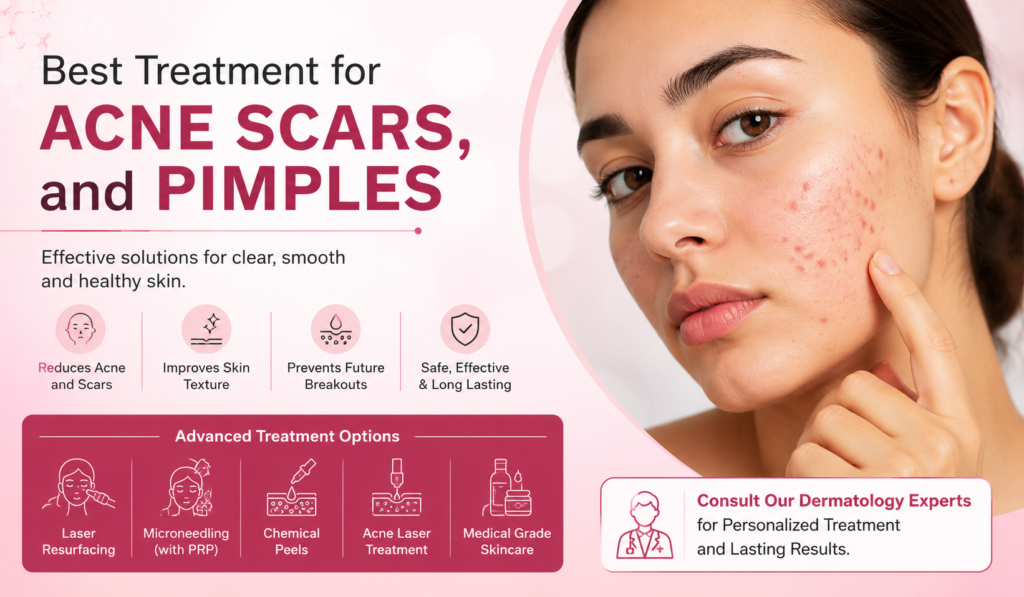

Best Treatment for Acne Scars, and Pimples – Acne is, honestly one of the most common skin issues around affecting teens. and adults too. Most pimples can clear up with the right care but sometimes they leave behind these stubborn marks like scars, dark patches, and that rougher uneven surface on the skin.
The good part is that modern dermatology has a bunch of safe, and fairly effective options for both active acnes, and the acne scars that stick around. From everyday medical skincare products to newer techniques, like chemical peels, microneedling, laser procedures, and sub Cision, a dermatologist can usually suggest what fits you best depending on your skin type, and how intense your condition is.
In this article briefly explained, we’re going to cover what causes acne, the main kinds of acne scars, dermatologist-approved treatments, some skin care tips that actually help, and practical ways to reduce the chance of future breakouts.Read more.
What Causes Acne?
Acne develops when hair follicles become clogged with excess oil (sebum), dead skin cells, and bacteria. Several factors can contribute to acne formation.
These are the common causes are included
- Excess oil production
- Hormonal changes
- Clogged pores
- Bacterial growth
- Genetics
- Stress
- Certain medications
- Use of pore-clogging skincare or makeup products
- High-glycaemic diets in some individuals
Identifying the underlying cause helps dermatologists create an effective treatment plan.
Types of Pimples
The type of acne helps determine the right treatment.
1.Whiteheads
Closed pores filled with oil, and dead skin cells.
2.Blackheads
Open clogged pores that appear black due to oxidation.
3.Papules
Small, red, inflamed bumps without pus.
4.Pustules
Red pimples with a white or yellow pus-filled centre.
5.Nodules
Large, painful lumps that develop deep under the skin.
6.Cystic Acne
Severe, painful, pus-filled lesions that often lead to permanent scarring if left untreated.
What Causes Acne Scars?
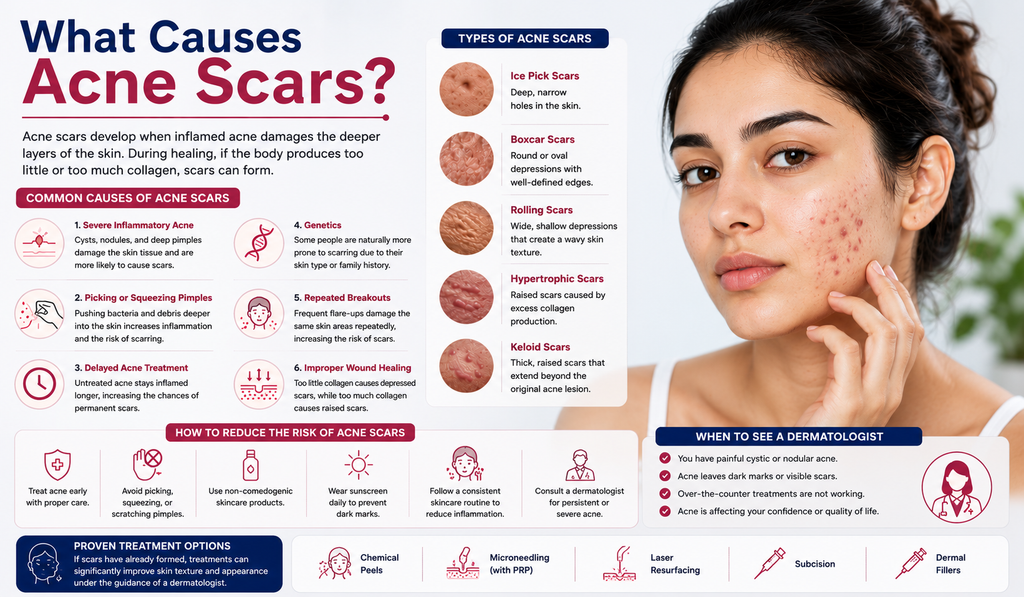
Acne scars form when deep inflammation damages the skin’s collagen during the healing process. Picking, squeezing, or popping pimples increases the risk of permanent scars.
Factors that increase scar formation include
- Severe acne
- Delayed treatment
- Picking or squeezing pimples
- Genetics
- Recurrent breakouts
- Inadequate acne management
Early treatment significantly reduces the likelihood of scarring.
Types of Acne Scars
Different scar types require different treatment approaches.
Atrophic Scars
These are depressed scars caused by collagen loss, and include
- Ice pick scars
- Boxcar scars
- Rolling scars
Hypertrophic Scars
Raised scars caused by excess collagen production.
Post-Inflammatory Hyperpigmentation
Although technically not a scar, these dark marks remain after acne heals, and often fade gradually with treatment.
Dermatologist-Approved Treatments for Pimples
The primary goal is to stop new breakouts before treating scars.
Topical Medications
Dermatologists commonly prescribe
- Benzoyl peroxide
- Salicylic acid
- Retinoids
- Azelaic acid
- Topical antibiotics – when appropriate
- Niacinamide-containing products
These ingredients help reduce oil production, unclog pores, decrease inflammation, and prevent new acne.
Oral Medications
For moderate to severe acne, your dermatologist may recommend
- Oral antibiotics
- Hormonal therapy for eligible patients
- Oral isotretinoin for severe, resistant acne
These treatments should only be used under medical supervision.
Best Treatments for Acne Scars
Once active acne is under control, scar treatments can begin.
1. Chemical Peels
Chemical peels use controlled exfoliation to remove damaged skin layers, and stimulate new skin growth.
Benefits include
- Improved skin texture
- Reduced pigmentation
- Brighter complexion
- Mild scar improvement
2. Microneedling
Microneedling creates tiny controlled micro-injuries that stimulate collagen production.
It helps to improve
- Rolling scars
- Boxcar scars
- Skin texture
- Fine lines
Multiple sessions are usually recommended for optimal results.
3. Laser Skin Resurfacing
Laser treatments stimulate collagen production while improving skin texture, and reducing acne scars.
Laser therapy can help
- Improve uneven skin tone
- Minimize pigmentation
- Smooth rough skin
- Reduce deep scars
Your dermatologist will determine the most suitable laser based on your skin type.
4. Sub Cision
Sub Cision is a minimally invasive procedure used for rolling acne scars. A fine needle is inserted beneath the scar to release fibrous bands pulling the skin downward, allowing the skin surface to become smoother over time.
5. Dermal Fillers
Certain depressed scars can be temporarily improved using dermal fillers that lift the skin to create a smoother appearance.
Results vary depending on the filler used, and may require repeat treatments.
6. PRP Therapy
PRP therapy uses components from your own blood to support skin healing, and collagen production. It is often combined with microneedling for enhanced results in selected patients.
Daily Skincare Routine for Acne-Prone Skin
A consistent skincare routine supports treatment, and helps prevent future breakouts.
Morning Routine
- Cleanse with a gentle cleanser
- Apply acne medication, if prescribed
- Use an oil-free moisturizer
- Finish with a broad-spectrum sunscreen – SPF 30 or higher
Night Routine
- Remove makeup thoroughly
- Cleanse your face
- Apply prescribed treatment products
- Moisturize before bedtime
Consistency is key to seeing long-term improvements.
Tips to Prevent Acne, and Scarring
Healthy habits can reduce the risk of breakouts, and permanent scars.
- Avoid picking or squeezing pimples
- Wash your face twice daily
- Remove makeup before sleeping
- Use non-comedogenic skincare products
- Keep hair clean, and away from your face
- Stay hydrated
- Eat a balanced diet rich in fruits, and vegetables
- Manage stress effectively
- Clean pillowcases, and makeup brushes regularly
- Seek early treatment for persistent acne
Mistakes to Avoid
Avoid these habits, that may worsen acne
- Over washing the face
- Using harsh scrubs daily
- Trying multiple new products at once
- Skipping sunscreen
- Touching your face frequently
- Sharing makeup products
- Stopping treatment too early
A simple, dermatologist-guided routine is often more effective than using numerous products.
When Should You Visit a Dermatologist?
Consult a dermatologist, if you have
- Acne lasting more than a few months
- Painful cystic acne
- Frequent breakouts
- Acne scars
- Dark spots after acne heals
- Acne affecting your confidence or daily life
- No improvement with over-the-counter treatments
Early intervention helps prevent long-term skin damage, and improves treatment outcomes.
Frequently Asked Questions (FAQs)
1. What is the best treatment for acne scars?
The best treatment depends on the type, and severity of the scars. Common dermatologist-recommended options include microneedling, laser resurfacing, chemical peels, sub Cision, dermal fillers, and PRP therapy.
2. Can acne scars be completely removed?
Many acne scars can be significantly improved, but complete removal is not always possible. A dermatologist can recommend treatments to reduce their appearance, and improve skin texture.
3. How can I prevent acne scars?
Treat acne early, avoid picking or squeezing pimples, follow a proper skincare routine, and seek medical advice for persistent or severe acne.
4. Is laser treatment effective for acne scars?
Yes. Laser skin resurfacing can improve skin texture, stimulate collagen production, and reduce the appearance of many types of acne scars. The treatment plan depends on your skin type, and scar depth.
5. When should I see a dermatologist for acne?
You should consult a dermatologist if your acne is severe, painful, leaves scars, does not improve with over-the-counter products, or keeps recurring despite a consistent skincare routine.