
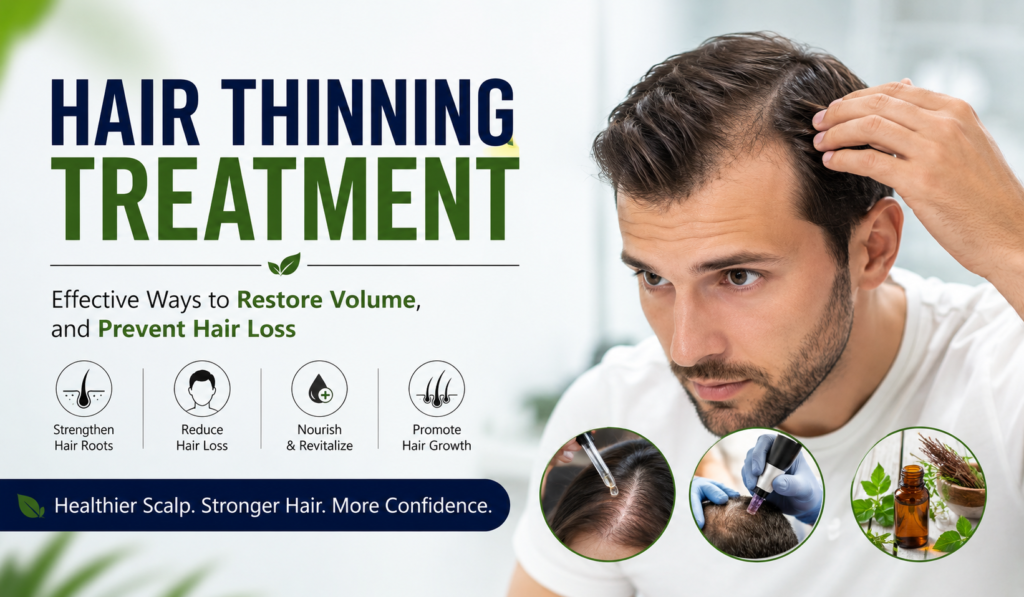

Hair thinning is one of the common concerns which affect all genders, and at all ages. Sometimes it happens slowly, sometimes it is due to genetics, or hormone shifts, or stress, or any other specific medical conditions.
Normally we are losing 50 to 100 hairs in a day. Factors like obvious hair thinning, hair part seems wider requires our attention. This article briefly explains about the Hair Thinning Treatment and Effective ways to restore volume as well as prevention of hair loss.
Hair Thinning
Hair thinning is a gradual decrease in hair density, a bit less than full baldness. This is unlike sudden hair loss; however it tends to increase, or it can reach the whole scalp. Sometimes it reaches certain regions like the crown, temples, or even along the hairline.
Hair Thinning causes
Factors contributing to the Hair thinning and its causes are
- Genetics – The most common cause of hair thinning across all genders
- Hormone Changes- Pregnancy, menopause, thyroid disorders, and PCOS can affect hair growth
- Stress- Physical or emotional stress may trigger temporary hair shedding
- Nutritional Deficiencies – Low Iron, Vitamin D, zinc, protein, or biotin levels can weaken hair
- Medical Conditions – Autoimmune diseases, scalp infections, and chronic illnesses may contribute to thinning
- Hair Styling Damage – Regular heat styling, tight hairstyles, bleaching, and chemical treatments can damage hair follicles
- Medications – Certain drugs used for blood pressure, depression, or chemotherapy may cause hair loss
When you need treatment?
Early treatment often leads to better results.
Below signs or symptoms indicates that our hair is thinning
- Increased hair shedding while brushing or washing
- Widening hair part
- Receding hairline
- Reduced hair volume
- Visible scalp
- Weaker, finer hair strands
- Slower hair growth
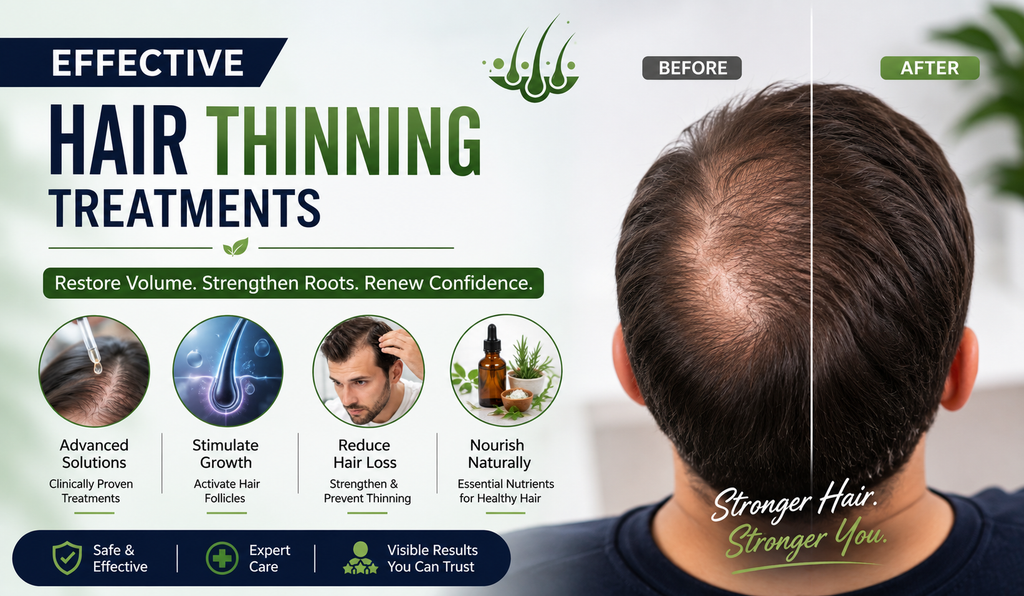
Effective Hair Thinning Treatments
PRP Therapy
PRP treatment uses your own blood platelets to stimulate inactive hair follicles, and encourage new hair growth.
Benefits of PRP treatment
- Promotes natural hair growth
- Improves hair thickness
- Strengthens weak follicles
- Minimal downtime
- Non-surgical procedure
Minoxidil
Minoxidil is an FDA-approved topical medication that helps increase blood flow to hair follicles, and supports hair regrowth.
Prescription Medications
Doctors may prescribe medications such as finasteride or other treatments depending on the cause of hair thinning.
Low-Level Laser Therapy
Laser devices stimulate hair follicles using low-level light energy, helping in improve the hair density over time.
Hair Transplant
For advanced hair loss, hair transplant treatment permanently relocates healthy hair follicles to thinning areas.
Nutritional support
A balanced diet rich in protein, iron, zinc, omega-3 fatty acids, and vitamins plays an important role in maintaining healthy hair growth.
Lifestyle Tips to Prevent Hair Thinning
- Eat a protein-rich, balanced diet
- Manage stress through exercise, meditation, or adequate sleep
- Avoid excessive heat styling, and harsh chemical treatments
- Use a gentle shampoo suitable for your scalp type
- Massage your scalp regularly to improve circulation
- Avoid tight hairstyles that pull on the hair
- Stay hydrated, and maintain overall good health
When Should You See a Hair Specialist?
Consult a dermatologist or hair specialist, if you have experienced any of the below
- Hair loss is sudden or severe
- You notice bald patches
- Hair thinning continues despite home care
- Your scalp becomes itchy, painful, or inflamed
- Hair loss is associated with other health symptoms
Early diagnosis can identify the underlying cause, and improve treatment success.
Expected Results
Patience, and consistent treatment are essential for the best outcome.
Results vary depending on the cause of hair thinning, and the treatment chosen
- PRP Therapy – Visible improvement may begin within 3–6 months after multiple sessions
- Minoxidil – Often requires consistent use for at least 4–6 months
- Hair Transplant – New hair typically starts growing within 3–4 months, with full results developing over 9–12 months
FAQs
1. Can hair thinning be reversed?
Yes. Many cases can be improved with early diagnosis, and appropriate treatments such as PRP therapy, medications, nutritional support, and lifestyle changes.
2. Which treatment is best for hair thinning?
The best treatment depends on the underlying cause. PRP therapy, Minoxidil, and hair transplantation are among the most effective options.
3. Is PRP treatment painful?
PRP involves small injections into the scalp. Most patients experience only mild discomfort, and the procedure is generally well tolerated.
4. How long does it take to see results?
Most treatments require consistency, and continuous treatment help with noticeable improvements typically appearing within 3 to 6 months.
5. Can women undergo hair thinning treatment?
Yes. Women can benefit from PRP therapy, topical treatments, nutritional therapy, and other medical treatments recommended by a dermatologist.