
Best Hair Regrowth Treatment for Men, and Women – Hair loss is one of the common issues which affects all genders all over the world. There are lot of reasons among any of these like genetics, hormones shift, stress, less nutrition intake, or medical conditions too.
Hair loss affects self-confidence, self-esteem even if it is small. Today there are lot of hair regrowth treatments available, which help in bringing back the hair healthier, thicker, and naturally.
From non-surgical therapies to advanced medical procedures, there are several effective options available to promote natural hair growth, and reduce further hair loss.Read more.
What Is Hair regrowth treatment?
Hair regrowth treatment refers to medical, and non-medical therapies designed to stimulate dormant hair follicles, improve scalp health, and encourage the growth of new, stronger hair. The ideal treatment depends on the cause, and severity of hair loss.
Causes of Hair Loss
Kind the cause of hair loss is the first step toward choosing the right treatment.
- Genetic Hair Loss –The most common cause in both men, and women
- Hormonal Changes – Pregnancy, menopause, thyroid disorders, and PCOS
- Stress – Physical, or emotional stress can trigger excessive hair shedding
- Nutritional Deficiencies – Low levels of iron, zinc, protein, vitamin D, and biotin
- Medical Conditions – Autoimmune diseases, scalp infections, and chronic illnesses
- Hair Styling Damage – Frequent use of heat tools, chemical treatments, and tight hairstyles
- Certain Medications – Some medicines may cause temporary, or permanent hair loss
Best Hair Regrowth Treatments
These are the hair regrowth Treatment are included
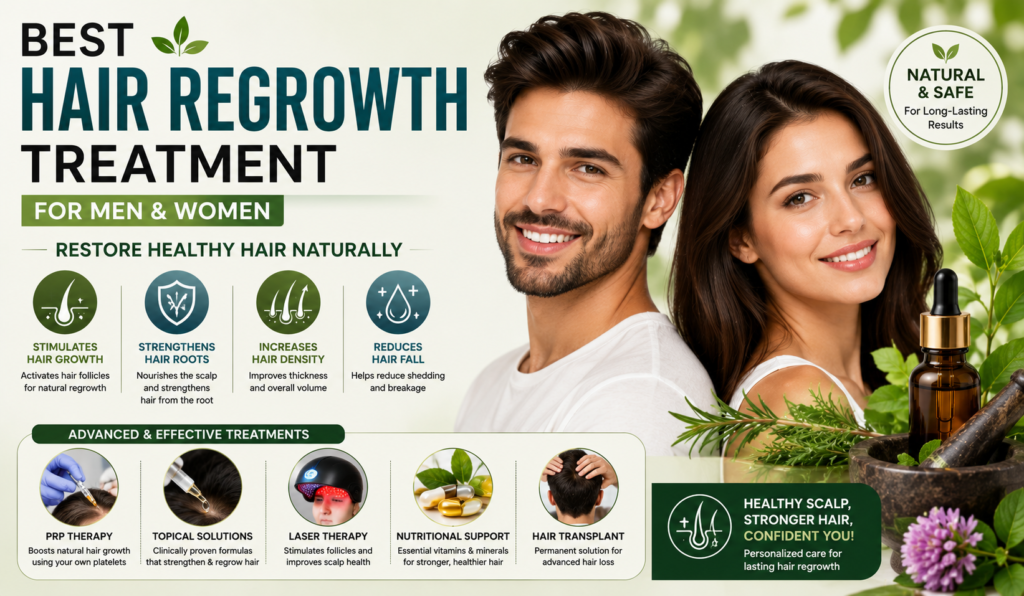
PRP Therapy
- PRP therapy is one of the most popular non-surgical hair restoration treatments.
- A small amount of the patient’s blood is processed to concentrate platelets, which are then injected into the scalp to stimulate hair follicles
Benefits are included
- Promotes natural hair growth
- Strengthens weak hair follicles
- Improves hair thickness, and density
- Uses the patient’s own blood components
- Minimal downtime, and quick recovery
Minoxidil
Minoxidil is an FDA-approved topical solution that helps increase blood flow to hair follicles, and supports hair regrowth. It is commonly recommended for both men, and women with early-stage hair loss
Finasteride
Finasteride is a prescription medication mainly used by men with pattern hair loss. It helps reduce hair loss by blocking the hormone responsible for shrinking hair follicles. It should only be used under medical supervision
Low-Level Laser Therapy
Laser therapy uses low-energy light to stimulate inactive hair follicles, improve circulation, and encourage healthier hair growth without surgery
Hair Transplant Surgery
- Hair transplantation is an effective option for individuals with advanced hair loss
- Healthy hair follicles are transferred from one area of the scalp to thinning, or bald areas, providing long-lasting results
Nutritional Therapy
Healthy hair begins with proper nutrition. A diet rich in protein, iron, zinc, vitamin D, omega-3 fatty acids, and biotin supports stronger, healthier hair growth
Natural Ways to Support Hair Regrowth
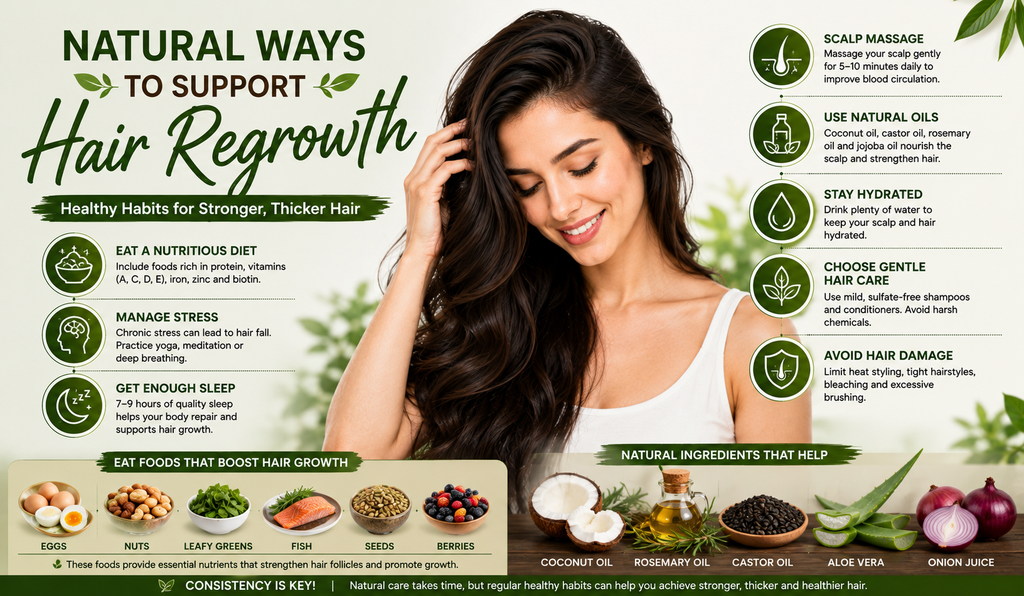
Along with medical treatments, healthy lifestyle habits can improve overall hair health.
It includes,
- Eat a balanced, protein-rich diet
- Stay hydrated throughout the day
- Massage your scalp regularly to improve blood circulation
- Avoid smoking, and excessive alcohol consumption
- Reduce stress through yoga, meditation, or regular exercise
- Get enough sleep every night
- Use mild, sulphate-free shampoos, and conditioners
- Avoid excessive heat styling, and harsh chemical treatment
Who Can Benefit from Hair Regrowth Treatment?
Hair regrowth treatments are suitable for,
- Men with male pattern baldness
- Women experiencing hair thinning
- Individuals with early-stage hair loss
- People recovering from stress-related hair shedding
- Patients with nutritional deficiencies affecting hair growth
- Those looking for non-surgical hair restoration options
How Long Does It Take to See Results?
Hair regrowth is a gradual process, and results vary depending on the treatment, and individual response.
- PRP Therapy – Visible improvement is usually seen after 3–6 months with multiple sessions
- Minoxidil – Results often appear after 4–6 months of regular use
- Laser Therapy – Improvement may be noticeable within 4–6 months
- Hair Transplant – New hair growth typically begins after 3–4 months, with full results developing over 9–12 months
Consistency is essential to achieve the best outcome.
Tips to Maintain Healthy Hair After Treatment
These are the tips for maintaining long-term results.
- Follow your doctor’s treatment plan
- Eat nutrient-rich foods
- Avoid tight hairstyles that pull on the scalp
- Protect your hair from excessive sun exposure
- Keep your scalp clean, and healthy
- Attend regular follow-up appointments with your hair specialist
When Should You See a Hair Specialist?
Consult a dermatologist, or hair restoration specialist, if u experienced
- Hair loss continues for several months
- You notice bald patches, or rapid thinning
- Home remedies do not improve your condition
- Hair loss is accompanied by scalp pain, redness, or itching
- Hair shedding becomes excessive
- Early diagnosis, and treatment often lead to better results
FAQs about hair regrowth treatment
1. What is the best hair regrowth treatment?
The best treatment depends on the cause of hair loss. PRP therapy, Minoxidil, laser therapy, and hair transplantation are among the most effective options.
2. Can women undergo hair regrowth treatment?
Yes. Women can benefit from PRP therapy, topical treatments, nutritional therapy, and other medically recommended hair restoration treatments.
3. Is PRP hair treatment safe?
Yes. PRP uses your own blood platelets, making it a safe, and minimally invasive procedure when performed by qualified professionals.
4. How long do hair regrowth treatments take to work?
Most treatments require several months of consistent use, with noticeable improvements typically appearing within 3–6 months.
5. Can natural remedies regrow hair?
Natural remedies, and a healthy lifestyle can support scalp health, and reduce hair fall, but medical treatments are often more effective for significant, or long-term hair loss.