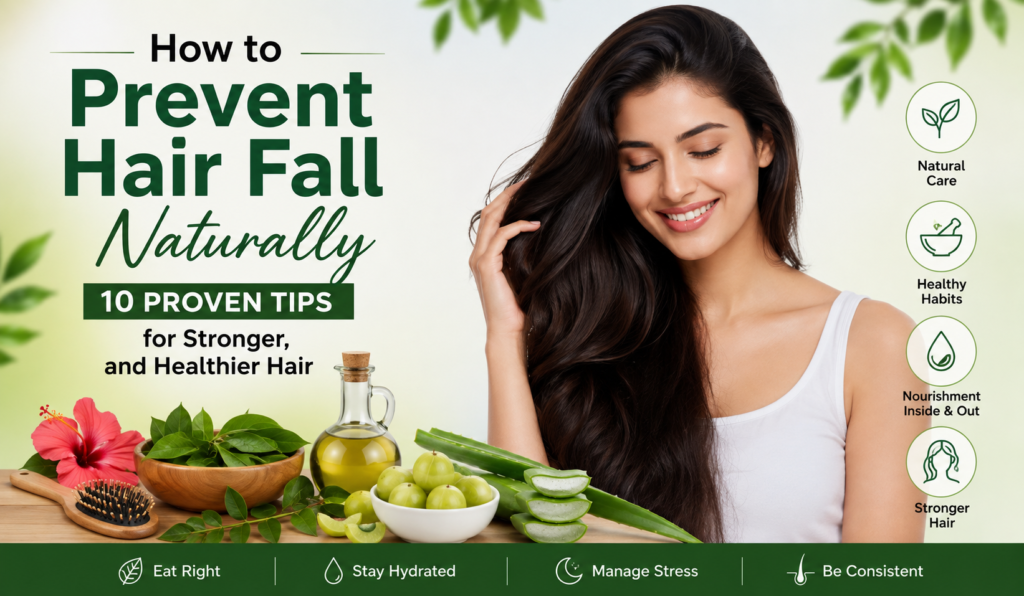

How to Prevent Hair Fall Naturally – Hair fall is one of the most common concerns for both men, and women. Losing 50–100 hairs a day is considered normal, However, excessive hair shedding may indicate poor nutrition, stress, hormonal changes, or improper hair care.
The good news is that many cases of hair fall can be reduced naturally by adopting healthy habits, and taking better care of your scalp.
In this article briefly explained, you will discover ten proven natural tips, which helps in reducing the hair fall, strengthen your roots, and encourage healthier, and thicker hair.
Why Does Hair Fall Happen?
Hair loss can happen for many reasons.
It includes,
- Poor nutrition
- Stress, and anxiety
- Hormonal imbalance
- Lack of sleep
- Dandruff, and scalp infections
- Excessive heat styling
- Chemical treatments
- Genetics
- Certain medications
- Medical conditions like thyroid disorders or anaemia
Finding the primary cause is the first step toward effective treatment.
Ten Proven Tips to Prevent Hair Fall Naturally
These are the ten proven tips
Eat a Protein-Rich Diet
Hair is made primarily of keratin, a protein. Without enough protein, hair becomes weak, and brittle.
Protein rich foods are
- Eggs
- Fish
- Chicken
- Lentils, and Beans
- Paneer
- Greek yogurt
- Soy products
- Nuts, and seeds
A balanced diet provides; the building blocks needed for healthy hair growth.
Massage Your Scalp Regularly
A gentle scalp massage improves blood circulation, and delivers the nutrients to hair follicles.
These are the benefits are included
- Stimulates hair growth
- Reduces stress
- Strengthens hair roots
- Improves scalp health
Massage your scalp for 5–10 minutes, daily using your fingertips or natural oils.
Apply Natural Hair oils
Regular oiling nourishes the scalp, and protects hair from damage.
Below are few natural hair oils
- Coconut oil
- Castor oil
- Rosemary oil
- Almond oil, and Argan oil
Warm the oil slightly, and massage it into your scalp before washing your hair.
Right way of washing the hair
Over washing or using harsh shampoos, can strip natural oils from your scalp.
These are the Healthy washing habits
- Wash 2–3 times a week
- Use a mild sulphate-free shampoo
- Rinse with lukewarm water
- Avoid vigorous rubbing
- Pat hair dry gently with a soft towel
Keeping the scalp clean without over-drying helps maintain healthy hair.
Stress management
Stress is a main cause for hair loss.
Try these stress-relieving activities
- Meditation, and Yoga
- Deep breathing exercises
- Walking
- Music
- Quality outdoor activities
- Managing stress supports both your mental well-being, and hair health
Stay Hydrated
Water plays an important role in maintaining healthy hair.
Aim to drink 2–3 litters of water daily to
- Keep hair hydrated
- Improve scalp health
- Support nutrient transport
- Reduce dryness, and breakage
Proper hydration also contributes to healthier skin, and nails.
Avoid Excessive Heat Styling
Everyday use of straighteners, curling irons, and blow dryers weakens the hair shaft.
Below are the ways to avoid
- Let hair air dry whenever possible
- Use heat protectant products
- Choose low heat settings
- Limit styling to special occasions
Reducing heat exposure helps preserve hair strength, and shine.
Get Essential Vitamins, and Minerals
Hair growth depends on intake of essential nutrients.
Essential vitamins and minerals are
- Iron
- Vitamin D
- Vitamin B12
- Biotin
- Zinc
- Vitamin C
- Omega-3 fatty acids
Leafy greens, citrus fruits, nuts, seeds, fatty fish, eggs, and whole grains are excellent choices.
Wet Hair handling
Wet hair is more fragile, and prone to breakage.
Protect your hair by
- Using a wide-tooth comb
- Avoiding tight hairstyles
- Not brushing aggressively
- Letting hair dry partially before combing
- Gentle handling reduces unnecessary hair loss
Get Enough Sleep
Hair repair, and growth occur while you sleep. Adults should aim for 7–9 hours of quality sleep every night. A consistent sleep schedule benefits your entire body.
Better sleep helps
- Balance hormones
- Reduce stress
- Improve cell repair
- Support healthy hair growth
Natural Home Remedies for Hair Fall
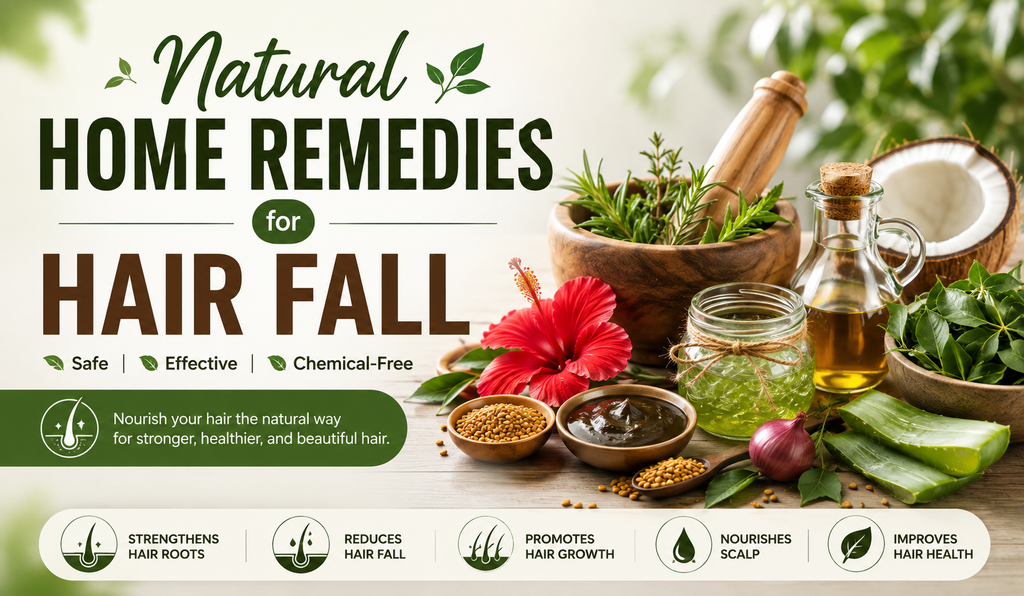
Always perform a patch test, before applying any natural remedy to your scalp.
Below are the natural home remedies
- Aloe vera gel for scalp hydration
- Onion juice to stimulate hair follicles
- Fenugreek seed paste for nourishment
- Hibiscus flower hair mask
- Curry leaves infused in coconut oil
Hair Care Habits to Avoid
Healthy habits make a significant difference over time
Below habits to avoid
- Tight ponytails or buns
- Frequent hair colouring
- Chemical straightening
- Excessive shampooing
- Smoking
- Crash dieting
- Skipping meals
- Sleeping with wet hair
.
When Should You See a doctor?
Early diagnosis, can help identify underlying medical conditions, and improve treatment outcomes.
Consult a healthcare professional, if you experience
- Sudden or severe hair loss
- Bald patches
- Persistent scalp itching or redness
- Hair loss lasting more than three months
- Hair fall accompanied by fatigue, weight changes, or other symptoms
FAQs about How to Prevent Hair Fall Naturally?
1. What is the best natural way to stop hair fall?
A healthy diet, regular scalp massage, proper hydration, stress management, and gentle hair care are among the most effective natural ways to reduce hair fall.
2. Which foods help reduce hair fall?
Protein-rich foods, leafy green vegetables, eggs, fish, nuts, seeds, fruits, and foods rich in iron, zinc, and vitamins support healthy hair growth.
3. Can stress cause hair fall?
Yes. High stress levels can disrupt the normal hair growth cycle, leading to temporary hair shedding.
4. Is oiling good for hair fall?
Yes. Regular scalp massage with natural oils like coconut, rosemary (diluted), or almond oil can nourish the scalp, and strengthen hair roots.
5. How long does it take to see natural hair growth results?
Most people notice improvements after 3–6 months of consistently following a healthy diet, and hair care routine, though results vary depending on the underlying cause of hair loss.