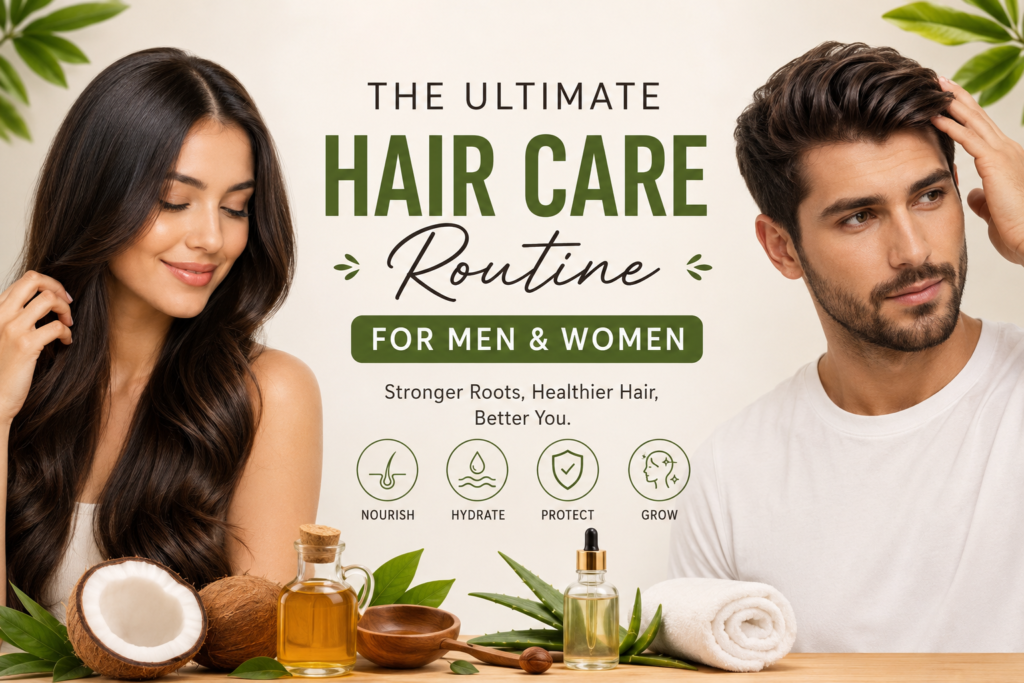

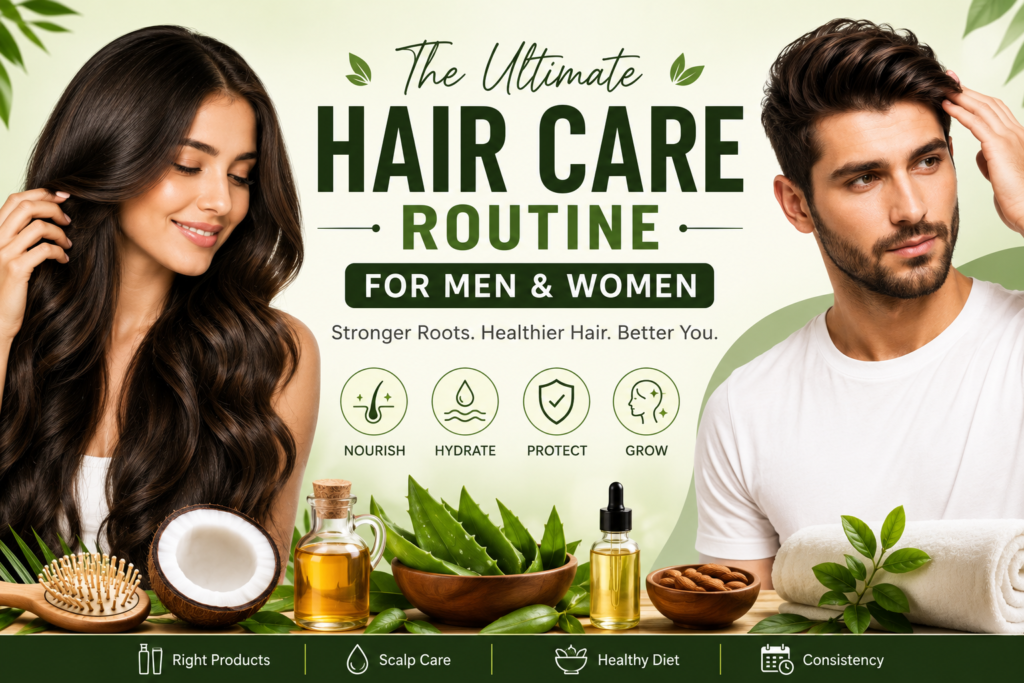
Hair Care Routine for Men and Women: Healthy, beautiful hair is more than just a matter of genetics—it’s the result of consistent care, proper nutrition, and using the right products for your hair type. Whether you’re dealing with hair fall, dandruff, dryness, frizz, or simply want stronger and shinier hair, following a structured hair care routine can make a significant difference.
Modern lifestyles expose our hair to pollution, UV rays, heat styling, chemical treatments, and daily stress, all of which can weaken hair over time. The good news is that with the right habits and products, you can maintain a healthy scalp and promote stronger, healthier hair growth.
In this comprehensive guide, we’ll walk you through the best hair care routine for both men and women, along with expert tips to keep your hair looking its best.
Hair Care Routine for Men and Women?
Your hair is exposed daily to environmental damage and styling practices that can affect its health. Without proper care, you may experience:
- Hair fall
- Hair thinning
- Dandruff
- Dry and brittle hair
- Frizzy hair
- Split ends
- Weak hair growth
- Scalp irritation
- Excess oil buildup
A consistent hair care routine keeps your scalp clean, nourished, and balanced, creating the ideal environment for healthy hair growth while reducing common hair concerns.
Step 1: Identify Your Hair Type
Before purchasing shampoos or conditioners, it’s important to understand your hair type. Using products designed for your specific needs will produce better results.
Oily Hair
- Becomes greasy within 24 hours
- Requires frequent cleansing
- May experience dandruff
Dry Hair
- Rough texture
- Lacks natural shine
- More prone to breakage and split ends
Normal Hair
- Balanced oil production
- Easy to manage
- Healthy appearance
Combination Hair
- Oily scalp
- Dry or damaged ends
Curly Hair
- Naturally dry
- Needs extra moisture
- More susceptible to frizz
Straight Hair
- Oil spreads quickly from scalp to ends.
- Can become greasy faster than other hair types
Choosing products that match your hair type is the foundation of an effective hair care routine.
Step 2: Wash Your Hair the Right Way
One of the biggest hair care mistakes is washing too often or using the wrong technique.
How Often Should You Wash Your Hair?
| Hair Type | Recommended Frequency |
| Oily Hair | Every 1–2 days |
| Normal Hair | 2–3 times per week |
| Dry Hair | 1–2 times per week |
| Curly Hair | 1–2 times per week |
Unless your scalp becomes excessively oily or sweaty, daily washing isn’t necessary and may strip away natural oils that protect your hair.
Best Hair Washing Tips
- Use lukewarm water instead of hot water.
- Focus the shampoo on the scalp rather than the lengths of the hair.
- Massage gently using your fingertips.
- Rinse thoroughly to remove product buildup.
- Avoid using excessive shampoo.
Step 3: Choose the Right Shampoo
Your shampoo should address your specific hair concerns rather than simply cleansing your hair.
Best Ingredients for Hair Fall
Look for shampoos containing:
- Biotin
- Caffeine
- Keratin
- Niacinamide
These ingredients may help strengthen hair and improve its overall appearance.
Best Ingredients for Dry Hair
Choose shampoos enriched with:
- Argan Oil
- Coconut Oil
- Aloe Vera
- Shea Butter
These ingredients help restore moisture and softness.
Best Ingredients for Dandruff
If you struggle with dandruff, consider shampoos containing:
- Ketoconazole
- Zinc Pyrithione
- Salicylic Acid
- Tea Tree Oil
These active ingredients can help reduce flaking and improve scalp health.
Pro Tip: If your hair is colored, chemically treated, or naturally dry, choose a sulfate-free shampoo to minimize moisture loss.
Step 4: Never Skip Conditioner
Conditioner is essential for maintaining healthy hair.
It helps:
- Lock in moisture
- Reduce frizz
- Prevent split ends
- Improve softness
- Make detangling easier
- Reduce breakage
How to Apply Conditioner Properly
- Apply only to the mid-lengths and ends.
- Avoid applying conditioner directly to the scalp.
- Leave it on for 2–3 minutes.
- Rinse with cool or lukewarm water.
Step 5: Oil Your Hair Weekly
Hair oiling remains one of the most effective ways to nourish both the scalp and hair shaft.
Best Oils for Hair
- Coconut Oil
- Argan Oil
- Almond Oil
- Rosemary Oil (mixed with a carrier oil)
- Castor Oil
Benefits of Hair Oiling
- Improves scalp circulation
- Reduces dryness
- Adds shine
- Minimizes breakage
- Supports healthier-looking hair
Massage your scalp gently for 5–10 minutes and leave the oil on for 1–2 hours or overnight before washing.
Step 6: Deep Condition Once Every Week
A weekly hair mask provides intensive nourishment and repairs damage caused by heat styling, pollution, and chemical treatments.
Look for Ingredients Like
- Keratin
- Honey
- Avocado
- Banana
- Protein
- Shea Butter
Regular deep conditioning improves elasticity, softness, and overall hair health.
Step 7: Protect Hair from Heat Damage
Heat styling tools can weaken the hair shaft and increase breakage over time.
If you use:
- Hair dryers
- Curling irons
- Hair straighteners
Step 8: Dry Your Hair Properly
Wet hair is more fragile than dry hair, making proper drying techniques essential.
Do This Instead
- Pat hair gently with a microfiber towel.
- Use a soft cotton T-shirt if available.
- Allow hair to air dry whenever possible.
- Avoid tying wet hair tightly.
Avoid
- Vigorous towel rubbing
- High-heat blow drying
- Sleeping with wet hair
Step 9: Comb Hair the Right Way
Improper brushing is a common cause of unnecessary hair breakage.
Best Tools
Wet Hair
- Wide-tooth comb
Straight Hair
- Paddle brush
Curly Hair
- Wide-tooth comb
- Fingers for gentle detangling
Always start detangling from the ends and gradually work upward.
Step 10: Nourish Your Hair from Within
Healthy hair starts with a balanced diet. Hair follicles require essential nutrients to support normal growth and strength.
Foods That Promote Healthy Hair
Protein
- Eggs
- Chicken
- Fish
- Lentils
Iron
- Spinach
- Beans
- Lean meats
Omega-3 Fatty Acids
- Salmon
- Walnuts
- Flaxseeds
Zinc
- Pumpkin seeds
- Chickpeas
Biotin
- Eggs
- Almonds
- Peanuts
Vitamin C
- Oranges
- Kiwi
- Strawberries
- Berries
Vitamin D
- Fortified dairy products
- Egg yolks
- Safe sunlight exposure
Don’t forget to drink enough water every day, as hydration supports both scalp and hair health.
Step 11: Manage Stress
Stress is one of the most common causes of temporary hair shedding.
Healthy ways to reduce stress include:
- Regular exercise
- Meditation
- Yoga
- Deep breathing exercises
- Getting 7–9 hours of quality sleep
Reducing stress benefits not only your hair but your overall well-being.
Step 12: Trim Your Hair Regularly
Although trimming doesn’t make hair grow faster, it helps maintain healthier-looking hair.
Regular trims every 8–12 weeks help:
- Remove split ends
- Prevent breakage
- Improve hair appearance
- Keep hair looking fuller.
Step 13: Avoid Common Hair Care Mistakes
Even the best products can’t compensate for damaging habits.
Avoid:
- Washing with very hot water
- Overusing shampoo
- Brushing aggressively
- Excessive heat styling
- Sleeping with wet hair
- Tight hairstyles
- Ignoring scalp conditions
- Using too many styling products
Small changes in your daily routine can significantly improve long-term hair health.
Daily Hair Care Routine for Men
Morning
- Comb hair gently.
- Apply a lightweight hair serum if needed.
- Wear a cap or use hair-friendly UV protection during prolonged sun exposure.
Evening
- Wash hair if you’ve exercised or sweated heavily.
- Massage your scalp for 2–3 minutes.
- Apply nourishing hair oil once or twice a week.
Note: If you notice receding hairlines or male pattern hair loss, consult a dermatologist early. Treatments such as minoxidil or finasteride may be appropriate for some individuals under medical supervision.
Daily Hair Care Routine for Women
Morning
- Detangle hair carefully.
- Apply a leave-in conditioner or anti-frizz serum.
- Protect hair from UV exposure when outdoors.
Weekly Routine
- Hair oil massage
- Deep conditioning hair mask
- Gentle scalp exfoliation every 2–4 weeks
If your hair is colored, bleached, or chemically treated, choose sulfate-free products and minimize heat styling to preserve moisture and reduce damage.
Simple Weekly Hair Care Schedule
| Day | Hair Care Routine |
| Monday | Shampoo + Conditioner |
| Tuesday | Hair Serum or Leave-In Conditioner |
| Wednesday | Rest Day |
| Thursday | Shampoo + Conditioner |
| Friday | Hair Oil Massage |
| Saturday | Hair Mask + Gentle Wash |
| Sunday | Scalp Massage + Hydration |
Consistency is more important than using many products. A simple routine followed regularly often delivers the best results.
When Should You See a Dermatologist?
While mild hair shedding is normal, certain symptoms require professional evaluation.
Consult a dermatologist if you experience:
- Sudden or severe hair loss
- Bald patches
- Persistent dandruff
- An itchy or painful scalp
- Excessive hair shedding lasting more than 2–3 months.
- Progressive hair thinning with a family history of baldness
Early diagnosis can help identify underlying medical conditions and improve treatment outcomes.
Frequently Asked Questions (FAQs)
Can I wash my hair every day?
Daily washing is generally unnecessary unless your scalp becomes very oily or you exercise heavily. Most people benefit from washing 2–3 times per week, depending on their hair type.
Does oiling reduce hair fall?
Hair oiling can improve scalp hydration and reduce hair breakage. However, it may not treat hair loss caused by genetics, hormonal changes, or medical conditions.
Is conditioner necessary for men?
Yes. Conditioner benefits everyone by reducing dryness, improving manageability, and protecting hair from damage, regardless of gender.
Does trimming make hair grow faster?
No. Hair grows from the scalp, not the ends. Trimming removes damaged ends, making hair appear healthier and reducing breakage.
Which vitamin is best for healthy hair?
Hair health depends on several nutrients, including protein, biotin, iron, zinc, vitamins C and D, and omega-3 fatty acids. A balanced diet is the best way to support healthy hair.
Read more: Top Hair Fall Treatment in Chennai