
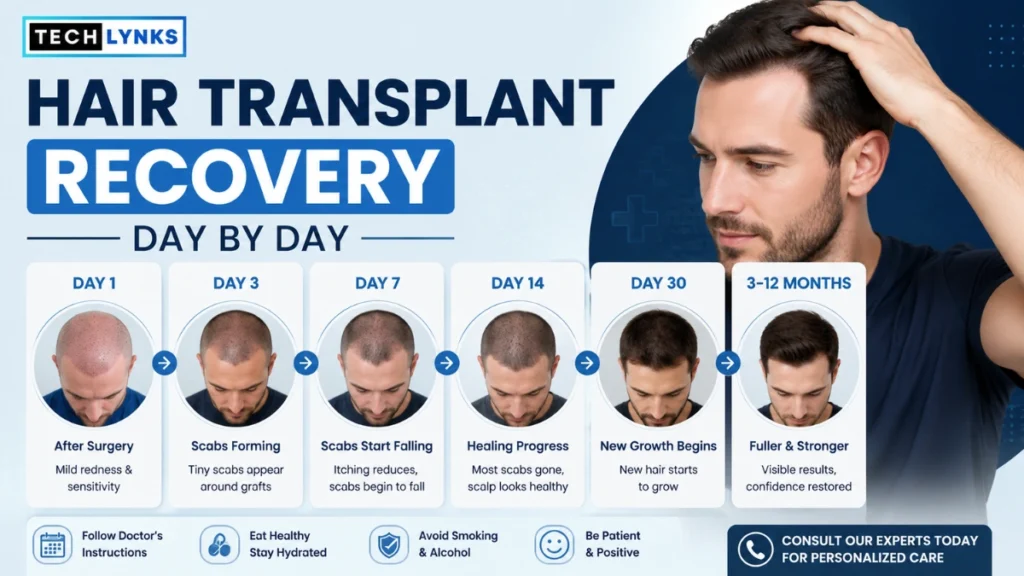

A hair transplant is a widely chosen solution for restoring lost hair and improving appearance. However, understanding the recovery process is essential to achieve the best possible results. Many patients have questions about swelling, scabbing, hair shedding, and when new hair growth will begin after the procedure.
Hair transplant recovery day by day varies depending on factors such as the transplant method, number of grafts, individual healing ability, and post-surgery care. This guide explains the complete recovery journey from the first day after surgery to the final hair growth stage.
Hair Transplant Recovery Day by Day
| Recovery Time | What Happens |
|---|---|
| Day 1 | Mild redness, swelling, and scalp tenderness |
| Days 2–7 | Scabs form and healing begins |
| Days 8–14 | Scabs fall and scalp improves |
| Month 1 | Initial healing completes |
| Months 2–3 | Resting phase, little visible growth |
| Months 4–6 | New hair growth starts |
| Months 6–12 | Hair density improves |
| 12+ Months | Final results become visible |
Day 1: First Day After Hair Transplant
The first day after a hair transplant is focused on protecting the newly implanted hair follicles. The grafts are delicate and require proper care to ensure successful healing.
Common experiences include:
- Mild scalp redness
- Slight swelling
- Tenderness or tightness
- Small scabs around implanted follicles
- Minor discomfort
Patients should avoid touching or rubbing the scalp during this stage.
Recovery Tips:
- Keep your head elevated while sleeping
- Take prescribed medicines as advised
- Avoid sweating and heavy physical activities
- Do not scratch or disturb implanted grafts
bHow to Get Glowing Skin Naturally for Men
Day 2–3: Swelling and Healing Stage
During the second and third days, swelling may become more noticeable. Some patients experience swelling around the forehead or eyes, which is a normal part of the healing process.
Expected changes:
- Increased scalp redness
- Mild swelling
- Formation of tiny crusts
- Slight itching sensation
Proper scalp care during this period helps protect the transplanted follicles.
Day 4–7: Scabbing and Initial Recovery
The first week after surgery is an important healing period. Small scabs usually form around each transplanted hair follicle.
During this stage:
- The scalp starts healing naturally
- Redness gradually reduces
- Itching may occur
- Hair grafts become more secure
Avoid removing scabs forcefully because it can affect the healing process.
Day 8–14: Scabs Begin to Fall
During the second week, most patients notice visible improvement.
Changes include:
- Scabs naturally falling away
- Reduced redness
- Improved scalp appearance
- Less sensitivity
Some transplanted hairs may start shedding during this period. This is normal and is known as shock loss.
Day 15–30: First Month Recovery
After one month, the outer scalp usually becomes fully healed.
Patients may experience:
- Temporary hair shedding
- Reduced scalp sensitivity
- Small signs of follicle activity
Although transplanted hairs may fall, the hair follicles remain healthy beneath the scalp and prepare for new growth.
Month 2–3: Hair Resting Phase
The second and third months are usually considered the waiting period after a hair transplant.
During this phase:
- Visible growth may be minimal
- Hair follicles remain in the resting stage
- The scalp continues internal healing
Maintaining a healthy lifestyle can support better results.
Helpful practices include:
- Eating protein-rich foods
- Drinking enough water
- Avoiding smoking
- Managing stress levels
Month 4–6: New Hair Growth Begins
Around the fourth month, many patients start noticing new hair growth.
Common improvements:
- Small new hairs appear
- Hair density slowly increases
- Hair texture begins improving
Initially, new hairs may look thin, but they usually become stronger and thicker over time.
Month 6–9: Visible Hair Improvement
Between six and nine months, noticeable transformation usually begins.
Patients may see:
- Better hair coverage
- Increased density
- Improved hairline appearance
- Stronger hair growth
Regular follow-ups with your hair transplant specialist help monitor progress.
Month 9–12: Final Growth Stage
Most patients achieve significant results between nine and twelve months after transplantation.
Expected outcomes:
- Natural-looking hair growth
- Improved scalp coverage
- Thicker transplanted hair
- Better overall appearance
Some patients may continue seeing improvements up to 18 months after the procedure.
Hair Transplant Recovery Timeline
| Period | Recovery Changes |
|---|---|
| Day 1 | Mild pain, redness, swelling |
| Days 2–3 | Swelling and scalp healing |
| Days 4–7 | Scab formation and recovery |
| Days 8–14 | Scabs fall and scalp improves |
| Month 1 | Initial healing completes |
| Month 2–3 | Resting phase |
| Month 4–6 | New hair growth begins |
| Month 6–12 | Visible improvement |
| 12+ Months | Final results |
Factors That Affect Hair Transplant Recovery
Hair Transplant Technique
The recovery period depends on the procedure used.
FUE Hair Transplant
Follicular Unit Extraction (FUE) is a minimally invasive method where individual hair follicles are extracted and implanted.
Benefits include:
- Smaller extraction marks
- Faster healing
- Less visible scarring
FUT Hair Transplant
Follicular Unit Transplantation (FUT) involves removing a strip of scalp tissue containing hair follicles.
Recovery may take slightly longer compared to FUE.
Number of Hair Grafts
The number of grafts implanted can influence recovery time. Larger procedures may require additional healing compared to smaller sessions.
Post-Surgery Care
Following your doctor’s instructions is important for protecting transplanted follicles.
Recommended care includes:
- Gentle scalp washing
- Avoiding scratching
- Protecting scalp from direct sunlight
- Using prescribed medications
Things to Avoid After Hair Transplant
For proper healing, avoid:
- Heavy workouts immediately after surgery
- Swimming
- Excessive sweating
- Direct sunlight exposure
- Scratching the scalp
- Smoking
- Unapproved hair products
When Can You Return to Normal Activities?
Recovery depends on individual healing, but generally:
- Office work: Within a few days
- Light activities: After doctor approval
- Exercise: Usually after a few weeks
- Hair styling products: After complete healing
Always follow your surgeon’s recommendations before resuming activities.
Is Hair Shedding Normal After Hair Transplant?
Yes, temporary hair shedding is a normal part of the recovery process.
The transplanted hair shafts may fall out during the resting phase, but the follicles remain inside the scalp. New permanent hair growth usually starts after a few months.
How to Improve Hair Transplant Results?
To support healthy hair growth:
- Follow post-operative instructions
- Maintain a balanced diet
- Avoid stress
- Keep your scalp clean
- Attend follow-up appointments
- Use recommended treatments
FAQs
1. How long does hair transplant recovery take?
Most patients experience initial healing within 7 to 14 days after a hair transplant. However, complete hair growth and final results may take around 9 to 12 months, depending on individual healing and hair growth cycles.
2. What happens on the first day after a hair transplant?
On the first day, patients may experience mild redness, swelling, scalp tightness, and small scabs around the implanted grafts. Proper care is important to protect the newly transplanted hair follicles.
3. Is swelling normal after a hair transplant?
Yes, swelling is a common part of the recovery process. It usually appears within the first few days and gradually reduces as the scalp heals.
4. When can I wash my hair after a hair transplant?
Hair washing should be done only according to your hair transplant specialist’s instructions. Usually, gentle washing begins after a few days to remove crusts without damaging grafts.
5. When do hair transplant scabs fall off?
Scabs usually start loosening and falling naturally between 7 to 14 days after the procedure. Patients should avoid removing scabs forcefully.
6. Is hair shedding after a hair transplant normal?
Yes, temporary hair shedding is normal after a hair transplant. This process, called shock loss, happens because transplanted hairs enter a resting phase before new growth begins.
7. When will new hair growth start after a hair transplant?
New hair growth generally begins around 3 to 4 months after surgery. Visible improvement usually continues over the next several months.
8. Can I return to work after a hair transplant?
Many patients can return to office work within a few days. The exact recovery time depends on the procedure type, swelling, and personal comfort.
9. How should I sleep after a hair transplant?
Patients are usually advised to sleep with their head elevated during the first few days to reduce swelling and avoid pressure on transplanted grafts.
10. Can I exercise after a hair transplant?
Heavy exercise should be avoided during the initial recovery period. Light activities can usually be resumed after getting approval from your doctor.
11. Are hair transplant results permanent?
Transplanted hair follicles are generally long-lasting because they are taken from areas resistant to hair loss. However, maintaining overall scalp health is important.
12. What should I avoid after a hair transplant?
After a hair transplant, avoid scratching the scalp, smoking, excessive sweating, direct sunlight exposure, swimming, and using unapproved hair products until complete healing.
13. Does FUE hair transplant heal faster than FUT?
FUE hair transplant usually has a faster visible healing process because it involves individual follicle extraction. FUT may require a slightly longer recovery period due to the strip extraction method.
14. Why is there no hair growth after one month of transplant?
One month after a hair transplant is still an early recovery stage. The follicles are usually in a resting phase, and visible growth commonly begins after the third month.
15. How can I improve my hair transplant recovery?
Following your surgeon’s instructions, maintaining a nutritious diet, avoiding smoking, protecting your scalp, and attending follow-up appointments can support better recovery and results.