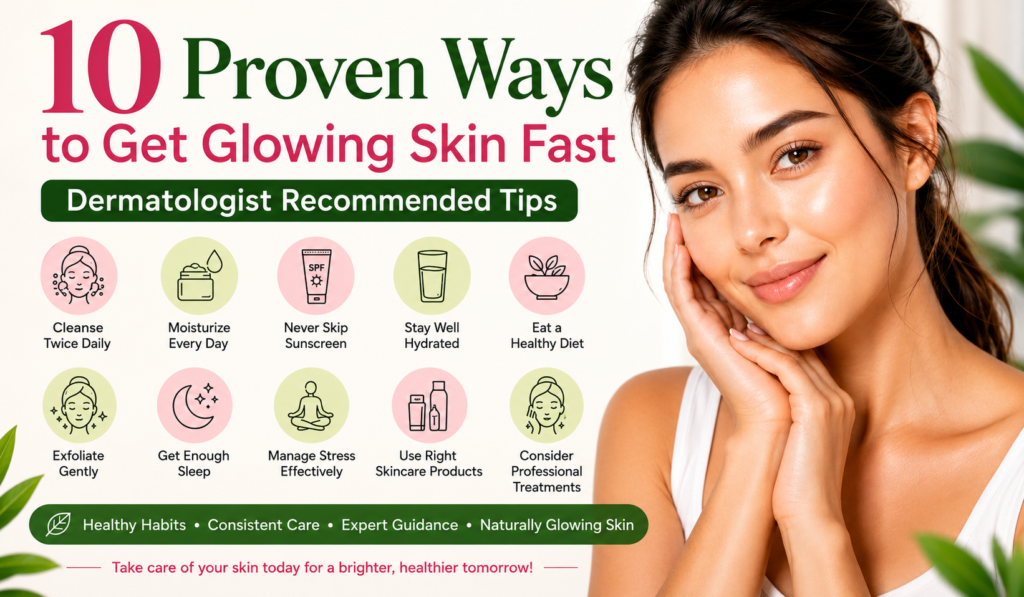

Get Glowing Skin – Healthy, glowing skin is often a reflection of good skincare habits, proper nutrition, hydration, and overall wellness. While there is no overnight miracle for achieving flawless skin, following dermatologist recommended practices can significantly improve your skin’s quality, brightness, and health in a short period.
Whether you’re dealing with dullness, un even skin tone, dryness, or acne marks, a consistent skincare routine combined with healthy lifestyle choices, can help you achieve naturally glowing skin.
In this article briefly explained, we’ll explore ten proven ways to get glowing skin fast, along with practical skincare tips, common mistakes to avoid, and answers to frequently asked questions.
Why Does Skin Lose Its Natural Glow?
Some internal, and external factors, can make your skin appear dull, and tired.
These factors can seriously improve your skin’s appearance over time.
- Dehydration
- Poor skincare routine
- Excessive sun exposure
- Lack of sleep
- Stress
- Unhealthy diet
- Pollution
- Smoking
- Hormonal changes
- Aging, and Build-up of dead skin cells
Clean Your Face Twice Daily
Cleansing is the foundation of healthy skin. Dirt, excess oil, sweat, makeup, and pollution accumulate on the skin throughout the day, clogging pores, and making the complexion look dull.
Choose a gentle cleanser suitable for your skin type, and wash your face every morning, and before bedtime. Avoid harsh soaps that strip away your skin’s natural oils.
These are the Benefits are included
- Removes impurities
- Prevents blocked pores
- Reduces acne breakouts
- Keeps skin fresh, and clean
Moisturize Every Day
Hydrous skin naturally appears healthier, and more radiant. Moisturizers help maintain the skin’s protective barrier, and prevent dryness.
These are the benefits are included
- Softer skin
- Improved elasticity
- Reduced dryness
- Healthy glow
Never Skip Sunscreen
Daily sunscreen is one of the most important dermatologist recommendations for maintaining glowing skin.
Benefits for sunscreen
It includes
- Prevents sun damage
- Reduces pigmentation
- Slows premature aging
- Maintains even skin tone
Stay Well Hydrated
Water plays a vital role in maintaining healthy skin. Drinking enough water helps support normal skin function, and overall health.
It includes
- Healthy skin texture
- Better elasticity
- Reduced dryness
- Fresh-looking complexion
Eat a Skin-Friendly Diet
Nutrition has a direct impact on skin health. Include foods rich in vitamins, minerals, antioxidants, and healthy fats.
Skin friendly diet
It includes
- Fresh fruits
- Leafy green vegetables
- Nuts, and seeds
- Fatty fish
- Eggs
- Whole grains
- Yogurt
- Berries
- Citrus fruits
- Limit sugary foods
- processed snacks, and excessive fried foods
Exfoliate Gently Once or Twice a Week
Exfoliation removes dead skin cells that can make your complexion appear dull.
These are the Benefits include for Brighter complexion
- Smoother texture
- Better absorption of skincare products
- Reduced clogged pores
Get Enough Sleep
Your skin repairs itself, while you sleep. Poor sleep may contribute to dullness, dark circles, and tired-looking skin.
Aim for 7–9 hours of quality sleep each night to support skin renewal, and overall health.
It helps
- Skin repair
- Improved complexion
- Reduced puffiness, and Healthier-looking skin
Manage Stress Effectively
Chronic stress, can affect skin health by triggering breakouts, and worsening conditions like eczema, and psoriasis.
These are the simple stress-management techniques are included
- Meditation
- Yoga
- Deep breathing
- Walking
- Reading
- Listening to music, and Spending time with family, and friends
Managing stress benefits both your skin, and overall well-being.
Skincare Products – Recommended by a Dermatologist
Not every skincare product works for every skin type. A dermatologist, can recommend products based on your individual needs, whether you have oily, dry, combination, acne-prone, or sensitive skin.
Depending on your concerns, they may suggest products for containing ingredients.
such as
- Vitamin C
- Niacinamide
- Hyaluronic acid
- Ceramides
- Retinoids
- Salicylic acid
- Glycolic acid
Consider the Professional Skin Treatments
If home care isn’t enough to achieve your desired results, a dermatologist may recommend advanced treatments.
These are the Common dermatologist performed procedures are included
- Chemical peels
- HydraFacial
- Microdermabrasion
- Laser skin rejuvenation
- Microneedling
- PRP therapy
These treatments can address pigmentation, acne scars, fine lines, uneven texture, and dullness.
Daily Habits for Naturally Glowing Skin
To maintain long-term for skin health
- Follow a consistent skincare routine
- Remove makeup before sleeping
- Avoid smoking
- Limit alcohol consumption
- Exercise regularly
- Change pillowcases regularly
- Avoid touching your face frequently
- Eat balanced meals
- Protect your skin from excessive sun exposure
- Schedule regular skin check-ups, if needed
Common Mistakes That Can Damage Your Skin
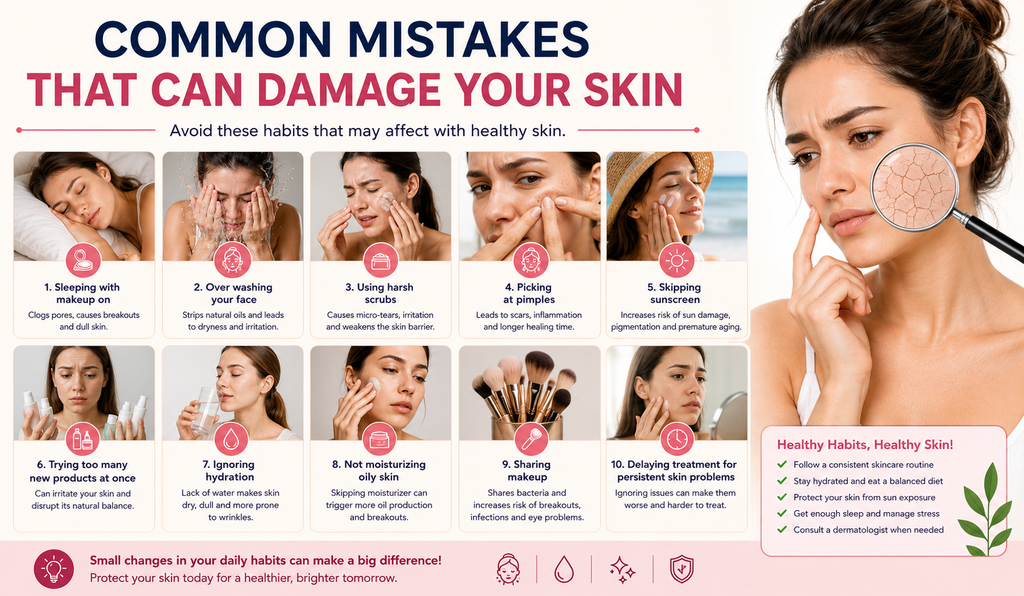
Avoid these habits that may affect with healthy skin.
- Sleeping with makeup on
- Over washing your face
- Using harsh scrubs
- Picking at pimples
- Skipping sunscreen
- Trying too many new products at once
- Ignoring hydration
- Not moisturizing oily skin
- Sharing makeup
- Delaying treatment for persistent skin problems
When Should You Visit a Dermatologist?
Professional evaluation helps identify the cause, and ensures appropriate treatment.
Consult a dermatologist, if you have
- Persistent acne
- Severe pigmentation
- Unexplained skin rashes
- Painful or recurring breakouts
- Sudden changes in moles
- Chronic dryness or itching
- Skin infections
- Acne scars
- Hair loss associated with scalp conditions
FAQS about Get Glowing Skin Fast
1. How can I make my skin glow naturally?
Follow a consistent skincare routine, stay hydrated, eat a balanced diet, wear sunscreen daily, get enough sleep, and manage stress.
2. Which foods help improve skin glow?
Fruits, leafy vegetables, berries, nuts, seeds, fatty fish, eggs, whole grains, and foods rich in vitamins A, C, and E support healthy skin.
3. Is sunscreen necessary even when indoors?
Yes. UV rays can penetrate windows, so applying a broad-spectrum sunscreen daily helps protect your skin from sun damage, and premature aging.
4. How often should I exfoliate my skin?
Most people benefit from gentle exfoliation once or twice a week. Over-exfoliating can irritate the skin, and damage its protective barrier.
5. When should I see a dermatologist for dull skin?
If your skin remains dull despite a proper skincare routine or you have persistent acne, pigmentation, rashes, or other skin concerns, consult a dermatologist for a personalized evaluation, and treatment plan.