

Pigmentation Treatment – Skin pigmentation is one of the common problems across people of all ages, and it affects different skin types. It starts as dark patches, uneven skin tone, and often pigmentation that comes from excess, or uneven distribution of melanin. Melanin is responsible for the colour of your skin, hair, and eyes, basically it is responsible for deep background pigment.
Modern dermatology keeps evolving, and it offers wide range of treatments, from topical creams, to chemical peels, and even more advanced laser therapies. This article briefly walks you through the causes, types, and the available treatment options. On the other end, we end up in seeing the expected results, and practical experience to see the reduction of pigmentation.
What Is Skin pigmentation?
Skin pigmentation refers to changes in the natural colour of the skin caused by increased, or decreased melanin production. Hyperpigmentation is the most common type, and appears as darker patches, or spots on the skin.
Pigmentation commonly affects any, or all of the following parts
- Face
- Forehead
- Cheeks
- Nose
- Upper lip
- Neck
- Hands
- Shoulders
Pigmentation causes
Several factors can trigger pigmentation.
Factors include any of the following
Sun Exposure
Ultraviolet rays stimulate melanin production, leading to sunspots, and uneven skin tone.
Hormonal Changes
Pregnancy, birth control pills, and hormonal imbalances can cause melasma.
Post-Inflammatory Hyperpigmentation
Dark spots often develop after acne, eczema, burns, or skin injuries.
Aging
As we grow older, we may have develop age spots, or liver spots due to years of sun exposure.
Genetics
Some individuals naturally produce more melanin, making them more prone to pigmentation.
Certain Medications
Some antibiotics, chemotherapy drugs, and hormone medications may increase skin pigmentation.
Skin Irritation
Frequent rubbing, harsh skincare products, or improper cosmetic procedures can worsen pigmentation.
Skin pigmentation types
Melasma
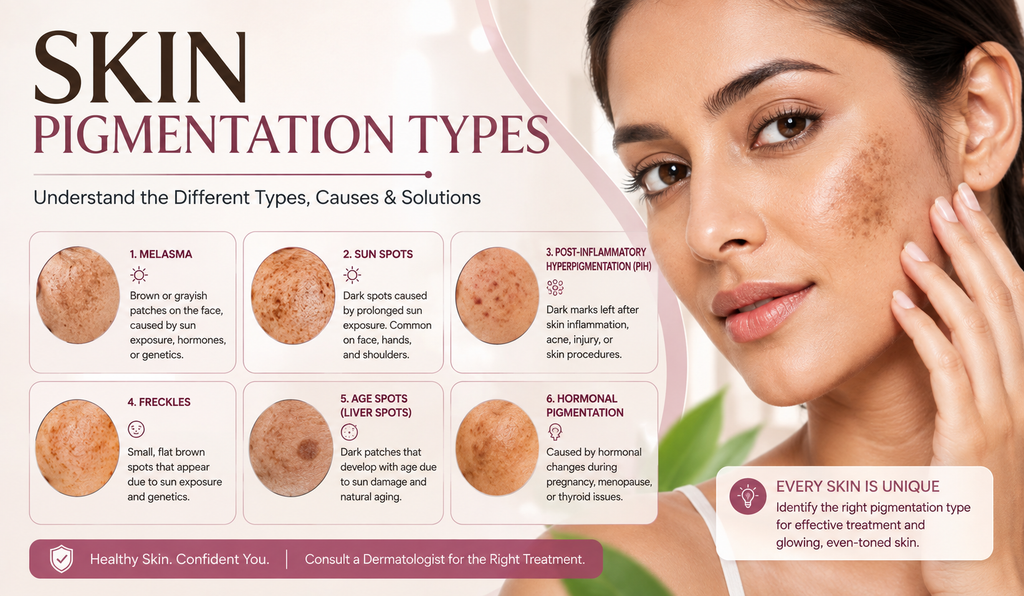
Melasma appears as brown, or grey patches on the cheeks, forehead, upper lip, and chin. It is often triggered by hormones, and sun exposure.
Symptoms of Melasma are as follows
- Symmetrical patches
- Gradual onset
- More common among women
- Worsens with exposure to sunlight
Sunspots
When we expose our body to UV lights for long term, we might have flat brown spots.
Sunspots affecting the following body parts,
- Face
- Hands
- Shoulders
- Arms
Post-Inflammatory Hyperpigmentation
Post-Inflammatory Hyperpigmentation (PIH) develops after skin inflammation, or injury.
Common causes of PIH are as follows
- Acne
- Pimples
- Cuts, and Burns
- Cosmetic procedures
Freckles
Freckles are small pigmented spots influenced by genetics, and sun exposure.
Age Spots
Age spots usually develop after the age of 40, due to cumulative sun damage.
Symptoms of Pigmentation
Signs of pigmentation include
- Brown patches
- Black spots
- Uneven skin tone
- Dark acne marks
- Greyish discoloration
- Increased pigmentation after sun exposure
Best Pigmentation treatment options
Treatment depends on the type, depth, and cause of pigmentation.
Topical creams
Dermatologists may recommend creams based on the skin types and pigmentation types. These ingredients help reduce melanin production, and improves skin tone over time.
Creams may contain any of the following ingredients
- Hydroquinone
- Azelaic acid
- Kojic acid
- Vitamin C
- Niacinamide
- Retinoids
- Tranexamic acid
Chemical Peels
Chemical peels remove damaged outer skin layers, promoting new skin growth.
Benefits of chemical peels are as follows
- Brightens the skin
- Reduces acne marks gradually
- Improves our skin texture
- Helps fading the pigmentation
Laser Treatment
Laser therapy targets excess melanin while minimizing damages to surrounding skin. Laser treatment should always be performed by a qualified dermatologist, especially for darker skin tones.
Benefits of laser treatment
- Precise treatments option
- Suitable for stubborn pigmentation
- Improves our skin clarity
- Minimal downtime with certain laser types
Microdermabrasion
This treatment gently exfoliates the skin to improve the mild pigmentation, and overall texture.
The treatment is best for
- Mild pigmentation
- Dull skin
- Fine lines
Microneedling
Microneedling stimulates collagen production, and may improve acne scars, and certain types of pigmentation when performed by trained professionals.
Benefits of microneedling are as follows
- Improves skin texture
- Reduces acne scars
- Supports skin renewal
Prescription Medications
Dermatologists may prescribe combinational therapies depending on the underlying cause, and severity of pigmentation.
Natural remedies for Mild pigmentation
Some home remedies may help improve mild discoloration, though evidence varies, and results are usually gradual. Always perform a patch test before using natural remedies, and discontinue use if irritation occurs.
Popular natural remedies options are as follows
- Aloe vera gel
- Plain yogurt
- Green tea
- Honey
- Oatmeal masks
Daily Skincare routine for pigmentation
Our morning routine should include any of the following
- Gentle cleanser
- Vitamin C serum
- Moisturizer
- Broad-spectrum sunscreen
Night Routine
Our night routine should include any of the following
- Gentle cleanser
- Pigmentation treatment
- Moisturizer
Consistency is essential for achieving noticeable improvements.
Expected Results
Results vary depending on the type, and severity of pigmentation.
Mild Pigmentation
Improvement may be seen within 4 to 8 weeks with consistent skincare routines.
Moderate Pigmentation
May require 2 to 4 months of treatment.
Deep Pigmentation
Often requires several months, and may involve multiple treatment sessions. Your dermatologist can provide a personalized treatment timeline.
Pigmentation prevention tips
- Apply sunscreen every day, even indoors if exposed to sunlight
- Reapply sunscreen every two hours during outdoors
- Wear hats, and use protective clothing
- Avoid picking acne, or scabs
- Use gentle skincare products
- Maintain a healthy diet rich in antioxidants
- Drink enough of water
- Consistently follow your dermatologist’s treatment plan
Who should see a Dermatologist?
Early evaluation helps identify the underlying cause, and ensures appropriate treatment.
Consult a dermatologist, if you experience any of the following
- Rapidly spreading pigmentation
- Large, or irregular dark patches
- Pigmentation accompanied by itching, bleeding, or pain
- No improvement after several months of treatment
- Frequent recurrence despite proper skincare
Frequently Asked Questions (FAQs)
1. What is the best treatment for skin pigmentation?
The best treatment depends on the cause, and type of pigmentation. Topical medications, chemical peels, laser therapy, and microneedling are commonly recommended by dermatologists.
2. Will pigmentation be removed permanently?
Some pigmentation can be significantly reduced or cleared, but recurrence is possible if the underlying cause, such as sun exposure, or hormonal changes which is not addressed.
3. What is the duration of pigmentation treatment?
Visible improvement may occur within 4 to 8 weeks for mild cases, while deeper pigmentation often requires several months of consistent treatment.
4. Is laser treatment safe for pigmentation?
When performed by a qualified dermatologist, laser treatment can be safe and effective. The choice of laser should be tailored to your skin type, and pigmentation.
5. Can sunscreen prevent pigmentation?
Yes. Daily use of a broad-spectrum sunscreen with SPF 30, or higher is one of the most effective ways to prevent new pigmentation, and reduce the risk of existing spots becoming darker.