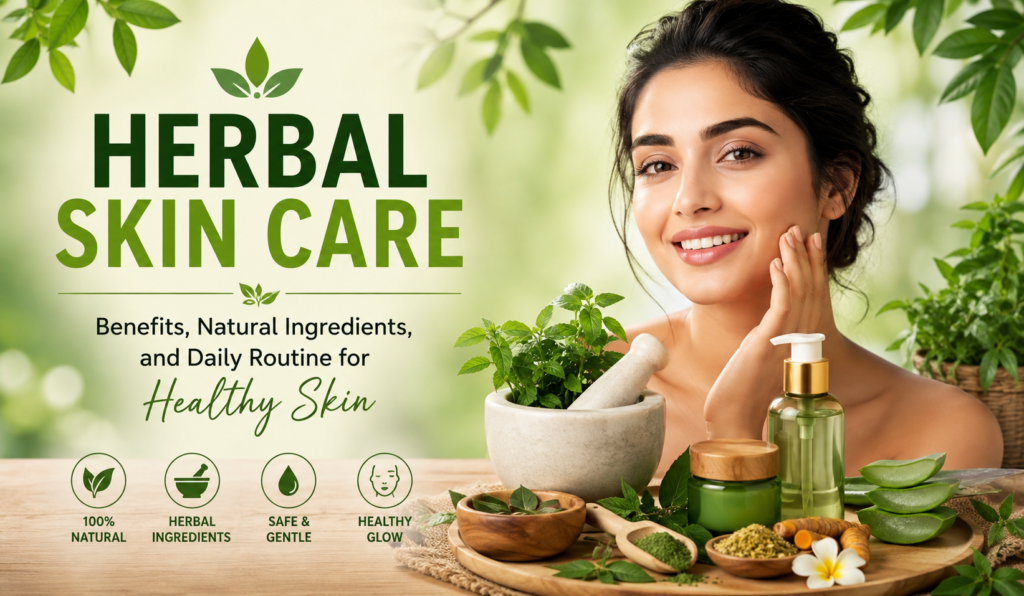

Herbal Skin Care – Healthy, glowing skin actually starts with the particular care, and many peoples are drifting toward herbal skin care as this gentle, natural way to feed their skin. These are lean on plant-based ingredients, that are filled with the vitamins, antioxidants, and calming compounds, that can help, keep the skin in a healthier state.
This article explains about the use of herbal skin care, performance of natural ingredients, few natural and real-world tips for getting a more balanced complexion.
What Is Herbal Skin Care?
Herbal Skin Care – It refers to the use of plant-derived ingredients, such as herbs, botanical extracts, natural oils, and flower extracts to cleanse, moisturize, protect, and improve the appearance of the skin.
Many herbal skincare products are expressed with the ingredients that provide hydration, antioxidant protection, and soothing properties, while supporting the skins natural barrier.
Benefits of Herbal Skin Care
Herbal skincare offers several potential benefits, when used constantly. Many herbal ingredients are suitable for sensitive skin, because they contain naturally soothing compounds.
These are the benefits are included
- Helps calm irritation
- Supports the skin barrier
- Suitable for daily use in many people
Rich in Antioxidants
Many herbs contain antioxidants that help protect the skin from environmental stressors such as pollution , and UV-related oxidative damage.
These are the examples are included
- Green tea
- Turmeric
- Rosemary
- Aloe vera
Provides Natural Hydration
Some herbal ingredients help maintain skin moisture, and softness.
These are the examples are included
- Aloe vera
- Cucumber
- Calendula, and Chamomile
Helps Soothe Inflamed Skin
Some botanical ingredients have calming properties that may help reduce the appearance of redness, and irritation.
Supports Healthy-Looking Skin
With consistent use, and a balanced skincare routine, herbal products can help improve the skin’s overall appearance by promoting hydration, and smoother texture.
Best Herbal Ingredients for Healthy Skin
These are the best herbal ingredients are included
Aloe Vera
Aloe vera is one of the most popular herbal skincare ingredients.
Benefits include
- Hydrates the skin
- Helps soothe irritation
- Supports skin healing
- Leaves skin feeling refreshed
Best for
- Dry skin
- Sensitive skin
- Sun-exposed skin
Turmeric
Turmeric contains curcumin, a compound known for its antioxidant, and anti-inflammatory properties.
Benefits of Turmeric
It includes
Use sparingly, as turmeric can temporarily stain the skin.
- Brightens the complexion
- Helps improve uneven skin tone
- Supports healthy-looking skin
Neem
Neem has traditionally been used in skincare due to its cleansing properties.
Benefits
It includes
- Helps cleanse oily skin
- May help reduce excess oil
- Suitable for acne-prone skin when tolerated
Green Tea
Green tea is rich in polyphenols, and antioxidants.
Benefits
It includes
- Helps protect against environmental damage
- Reduces the appearance of redness
- Supports healthy skin
Chamomile
Chamomile is widely known for its soothing properties.
Benefits
It includes
- Calms sensitive skin
- Helps reduce irritation
- Supports skin comfort
Calendula
Calendula flower extract is commonly used in skincare products for its soothing, and moisturizing properties.
Benefits
It includes
- Helps nourish dry skin
- Supports skin repair
- Improves skin softness
Rose Water
Rose water is a refreshing botanical ingredient.
Benefits
It includes
- Hydrates the skin
- Refreshes the complexion
- Helps maintain the skin’s natural balance
Cucumber
Cucumber provides hydration, and a cooling sensation.
Benefits
It includes
- Refreshes tired skin
- Reduces the feeling of dryness
- Leaves the skin soft
Liquorice Root Extract
liquorice root is often included in products designed to brighten the appearance of the skin.
Benefits
It includes
- Helps improve uneven skin tone
- Supports a brighter-looking complexion
- Suitable for pigmentation-focused skincare routines
Herbal Skin Care Routine
Morning Routine
Step 1- Gentle Herbal Cleanser
Choose a cleanser containing soothing herbal extracts that match your skin type
Step 2 – Herbal Toner
Use an alcohol-free toner with ingredients such as rose water or chamomile
Step 3 – Herbal Serum
Select a lightweight serum containing botanical extracts, and hydrating ingredients
Step 4 – Moisturizer
Apply a moisturizer with herbal ingredients like aloe vera, calendula, or green tea
Step 5 – Sunscreen
Finish with a broad-spectrum sunscreen to protect your skin from UV damage
Night Routine
Step 1 – Cleanse
Remove makeup, sunscreen, and impurities using a gentle cleanser
Step 2 – Apply Treatment Products
Use targeted products for concerns such as acne, pigmentation, or dryness, if recommended by your dermatologist
Step 3 – Moisturize
Apply a nourishing moisturizer to support overnight skin repair
Herbal Face Masks
Aloe Vera, and Honey Mask
Benefits
- Deep hydration
- Softer skin
- Healthy glow
Use once or twice a week.
Yogurt, and Turmeric Mask
Benefits
- Gentle exfoliation
- Brighter-looking skin
- Improved texture
Apply for 10–15 minutes before rinsing.
Oatmeal, and Chamomile Mask
Benefits
- Soothes sensitive skin
- Helps reduce dryness
- Calms irritation
Herbal Oils for Skin Care
Choose oils appropriate for your skin type, and avoid using them if they cause irritation.
Some plant-based oils can help nourish the skin.
These are the Prevalent options are included
- Jojoba oil
- Rosehip oil
- Argan oil, and Sweet almond oil
Lifestyle Tips for Healthy Skin
Healthy skin depends on more than skincare alone.
Stay Hydrated
Drink enough water throughout the day to support overall skin health.
Eat a Balanced Diet
These are the balanced diet foods are included
- Fruits
- Vegetables
- Whole grains
- Lean proteins, and Healthy fats
Get Enough Sleep
- Aim for 7–9 hours of quality sleep each night to allow your skin to recover
Exercise Regularly
- Regular physical activity supports healthy circulation, and overall well-being
Manage Stress
- Stress can contribute to skin concerns in some people. Relaxation techniques, and mindfulness may help
Tips for Choosing Herbal Skin Care Products
It includes,
- Read the ingredient list carefully.
- Choose products suitable for your skin type.
- Look for fragrance-free options if you have sensitive skin.
- Perform a patch test before using a new product.
- Avoid products with harsh alcohols if they cause dryness.
- Check the product’s expiration date.
Mistakes to Avoid
- Assuming all natural ingredients are safe for everyone
- Skipping sunscreen
- Over-exfoliating
- Using too many new products at once
- Ignoring patch testing
- Sleeping with makeup on
- Not moisturizing oily skin
When to See a Dermatologist
A dermatologist can recommend treatments tailored to your skin’s needs
Consult a dermatologist, if you experience
- Persistent acne
- Severe pigmentation
- Painful skin irritation
- Unexplained rashes
- Skin infections
- No improvement after several weeks of consistent care
Frequently Asked Questions (FAQs)
1. Is herbal skin care suitable for all skin types?
Herbal skincare can be suitable for many skin types, but individual reactions vary. Always choose products designed for your skin type ,and perform a patch test before regular use.
2. Can herbal skin care help with acne?
Some herbal ingredients, such as aloe vera, green tea, and neem, may support acne-prone skin as part of a comprehensive skincare routine. Persistent or severe acne should be evaluated by a dermatologist.
3. How long does it take to see results from herbal skincare?
Results vary depending on your skin concerns , and the products used. With consistent use, many people notice improvements in hydration , and skin texture within several weeks.
4. Do I still need sunscreen if I use herbal skincare products?
Yes. Daily use of a broad-spectrum sunscreen with SPF 30 or higher is essential to protect your skin from UV damage , and help prevent premature aging , and pigmentation.
5. Can I make herbal skincare products at home?
Simple DIY masks using ingredients such as aloe vera, honey, oatmeal, or yogurt can be used occasionally. However, homemade products should be prepared hygienically, used promptly, and discontinued if they cause irritation.