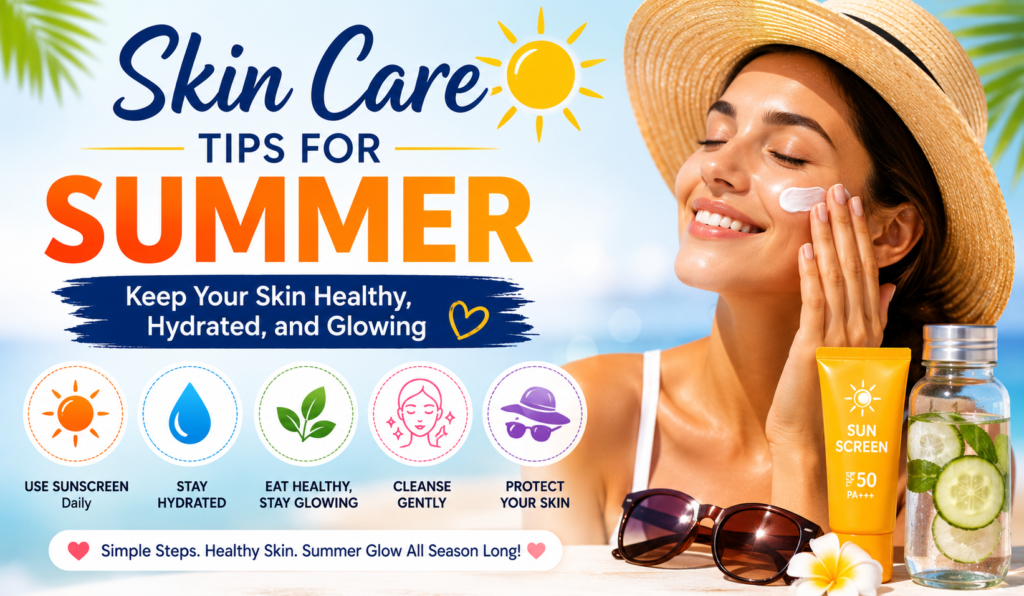

Skin Care Tips for Summer – Summer kind of pulls in longer days, more sunshine, and lots of outdoor plans, but it also drags your skin through heat, humidity, constant sweat, and those harmful UV rays.
All that stuff can bring sunburn, dehydration, acne breakouts, uneven tanning, clogged pores and yes, that earlier look of premature aging, if your skin isn’t really protected.
In this article briefly explained, you will get the best skin care tips for summer, what kinds of products actually fit, mistakes people frequently make, and everyday guidance for keeping your skin radiant, even when it feels a bit much outside.
Why Does Your Skin Need Extra Care During Summer?
The combination of high temperatures, and increased sun exposure can affect your skin in several ways.
These are the common summer skin concerns include,
- Excess oil production
- Sunburn
- Dehydration
- Tanning
- Acne breakouts
- Clogged pores
- Heat rash
- Un even skin tone
A dedicated summer skincare routine helps, minimalize these issues. while keeping your skin comfortable, and healthy.
Cleanse Your Face Twice a Day
Sweat, oil, sunscreen, and environmental pollutants can collect on your skin during summer.
Benefits of Cleansing
These are the benefits are included
- Removes dirt, and excess oil
- Prevents clogged pores
- Reduces acne breakouts
Choose the Right Cleanser
- Oily Skin – Gel or foaming cleanser
- Dry Skin – Hydrating cream cleanser
- Combination Skin – Gentle balancing cleanser
- Sensitive Skin – Fragrance-free, mild cleanser
Avoid washing your face too often, as over-cleansing can strip your skin’s natural moisture barrier.
Never Skip Sunscreen
Sunscreen is the most important step in any summer skincare routine.
Why Sunscreen Matters?
- Protects against harmful UVA, and UVB rays
- Helps prevent sunburn
- Reduces the risk of pigmentation
- Helps prevent premature wrinkles, and fine lines
- Lowers the risk of skin cancer
How to Use Sunscreen?
- Choose a broad-spectrum sunscreen with SPF 30 or higher
- Apply 15–20 minutes before sun exposure
- Reapply every two hours when outdoors
- Reapply after swimming or heavy sweating
Stay Hydrated
Hot weather increases water loss through sweat, making hydration essential.
Benefits
Drink enough water throughout the day, and include water-rich foods such as watermelon, cucumber, oranges, and strawberries in your diet.
- Helps maintain skin elasticity
- Reduces dryness
- Supports a healthy skin barrier
- Promotes a fresh, radiant complexion
Lightweight Moisturizer
Many people think oily skin doesn’t need moisturizer in summer—but every skin type benefits from proper hydration.
Best Choices
- Oily Skin – Oil-free gel moisturizer
- Dry Skin – Lightweight cream with ceramides or hyaluronic acid
- Combination Skin – Gel-cream moisturizer
- Sensitive Skin – Fragrance-free moisturizer
Hydrated skin often feels more balanced, and comfortable.
Vitamin C Serum
Vitamin C is a powerful antioxidant that can help protect the skin from environmental stressors.
Benefits of serum
- Brightens the complexion
- Helps improve uneven skin tone
- Supports collagen production
- Reduces the appearance of sun-induced pigmentation
Apply it in the morning before moisturizer, and sunscreen.
Exfoliate Gently
Exfoliation removes dead skin cells, and helps maintain smooth, glowing skin.
Benefits
- Unclogs pores
- Improves skin texture
- Enhances product absorption
- Promotes a brighter appearance
Recommended Frequency
- Oily Skin – 2–3 times per week
- Dry Skin – Once or twice per week
- Combination Skin – 1–2 times per week
Avoid harsh scrubs or over-exfoliating, which can irritate the skin.
Have Your Skin Cool
High temperatures can leave your skin feeling irritated, and overheated.
Cooling Tips
- Use refrigerated aloe vera gel
- Apply a cool compress if your skin feels hot
- Mist your face with a hydrating facial spray
- Avoid washing your face with very hot water
Wear Protective Clothing
Protect your skin by wearing
- Wide-brimmed hats
- UV-protective sunglasses
- Lightweight long-sleeved clothing
- Breathable cotton fabrics
Seek shade during peak sunlight hours, typically between 10 a.m. and 4 p.m.
Eat Skin-Friendly Foods
A healthy diet supports healthy skin.
Include foods rich in
- Vitamin C
- Vitamin E
- Omega-3 fatty acids
- Zinc
- Antioxidants
These are the Examples include
- Berries
- Citrus fruits
- Leafy greens
- Tomatoes
- Nuts, and Seeds
- Fatty fish
Avoid Touching Your Face
It includes
- Sweaty hands can transfer bacteria, dirt, and oil to your skin, increasing the risk of clogged pores, and breakouts
- Wash your hands regularly, and avoid picking at pimples
Use Face Masks Weekly
Weekly masks can refresh your skin, and address seasonal concerns.
Clay Masks
Best for oily, and acne-prone skin.
Benefits of Clay masks
It includes
- Absorb excess oil
- Minimize shine
- Help unclog pores
Hydrating Masks
Ideal for dry or dehydrated skin.
Benefits
It includes
- Restore moisture
- Improve softness
- Enhance skin radiance
Remove Makeup Before Bed
It includes
- Sleeping with makeup on can trap oil, sweat, and impurities
- Always remove makeup thoroughly before cleansing to help prevent clogged pores, and breakouts
Choose Non-Comedogenic Products
Products labelled non-comedogenic are formulated to reduce the likelihood of clogging pores, making them a good choice for acne-prone skin.
Best Summer Skincare Routine
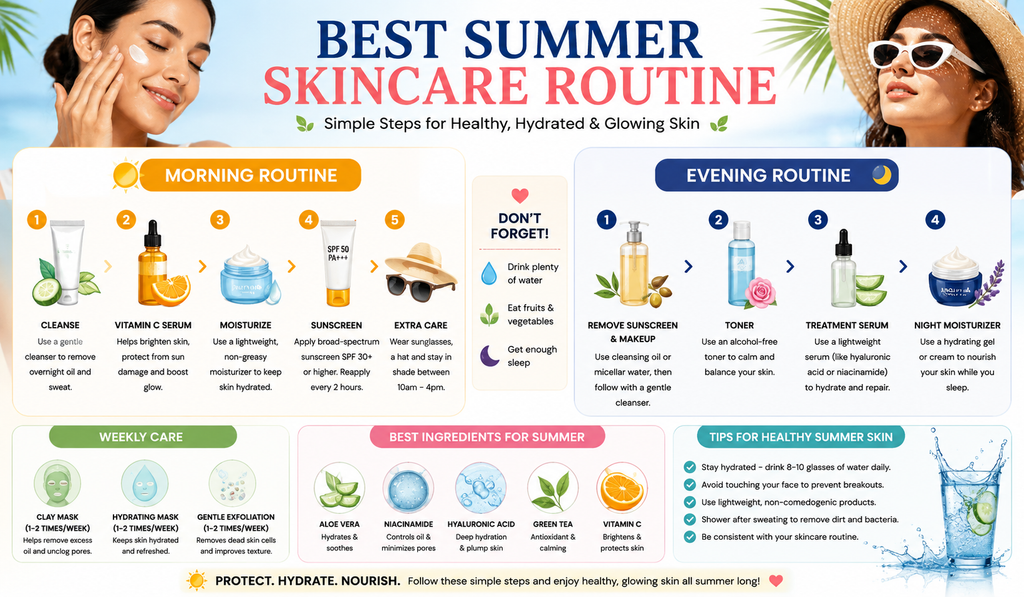
Morning Routine
It includes
- Gentle cleanser
- Vitamin C serum
- Lightweight moisturizer
- Broad-spectrum sunscreen
Evening Routine
It includes
- Remove makeup, and sunscreen
- Gentle cleanser
- Targeted serum
- Moisturizer
Consistency is key to maintaining healthy summer skin.
Summer Skincare Mistakes
Avoid these habits
It includes
- Skipping sunscreen on cloudy days
- Not reapplying sunscreen
- Over-washing your face
- Using heavy, greasy creams
- Picking acne lesions
- Ignoring hydration
- Over-exfoliating
- Using expired sunscreen
When to See a Dermatologist
- Professional advice can help identify underlying conditions, and recommend appropriate treatment
Consult a dermatologist, if you experience
- Severe or blistering sunburn
- Persistent acne
- New or changing moles
- Severe pigmentation
- Heat rash that doesn’t improve
- Skin irritation that persists despite home care
Frequently Asked Questions (FAQs)
1. What is the most important skincare step during summer?
Daily use of a broad-spectrum sunscreen with SPF 30 or higher is the most important step to protect your skin from harmful UV rays, sunburn, and premature aging.
2. Should oily skin use moisturizer in summer?
Yes. Oily skin still needs hydration. A lightweight, oil-free gel moisturizer can help maintain the skin barrier without feeling greasy.
3. How often should I reapply sunscreen?
Reapply sunscreen every two hours when outdoors, and more frequently after swimming or heavy sweating.
4. Can I exfoliate every day during summer?
No. Daily exfoliation can damage the skin barrier. Most people benefit from exfoliating one to three times a week, depending on their skin type.
5. What foods help keep skin healthy during summer?
Water-rich fruits, and vegetables, berries, citrus fruits, leafy greens, nuts, seeds, and fatty fish provide vitamins, antioxidants, and healthy fats that support skin health, and hydration.