


Sensitive Skin Care Tips – Sensitive skin requires extra attention, especially because it is easily affected by tougher skincare products, environmental shifts, or even stress. Reactions such as redness, irritation, dryness, or itching and it can feel pretty sudden too.
If we follow right daily habits, gentle skin care routine, we keep our skin settled, and healthy. This article briefly explains about the best tips for sensitive skin care, most common triggers to avoid, simple routine which helps protect your skin barrier.
What Is Sensitive Skin?
Sensitive skin is kind of more easily irritated than normal skin, it may start reacting to certain ingredients. Also, weather conditions, fragrances, or skincare products can do it, and then you get discomfort and sometimes visible redness too.
Signs of Sensitive Skin
These are the Signs are included
- Redness, Dryness
- Flaking
- Itching
- Burning, or stinging sensation
- Tightness after cleansing
- Frequent skin irritation
- Easy reaction to new skincare products
Causes of Sensitive Skin
Some factors can make your skin more sensitive, including
- Weak, or damaged skin barrier
- Harsh soaps, and cleansers
- Over-exfoliation
- Fragranced skincare products
- Sun exposure
- Pollution
- Allergies
- Stress
- Extreme weather conditions
- Eczema, or rosacea
Understanding your triggers is the first step toward healthier skin.Read more.
Daily Sensitive Skin Care Tips
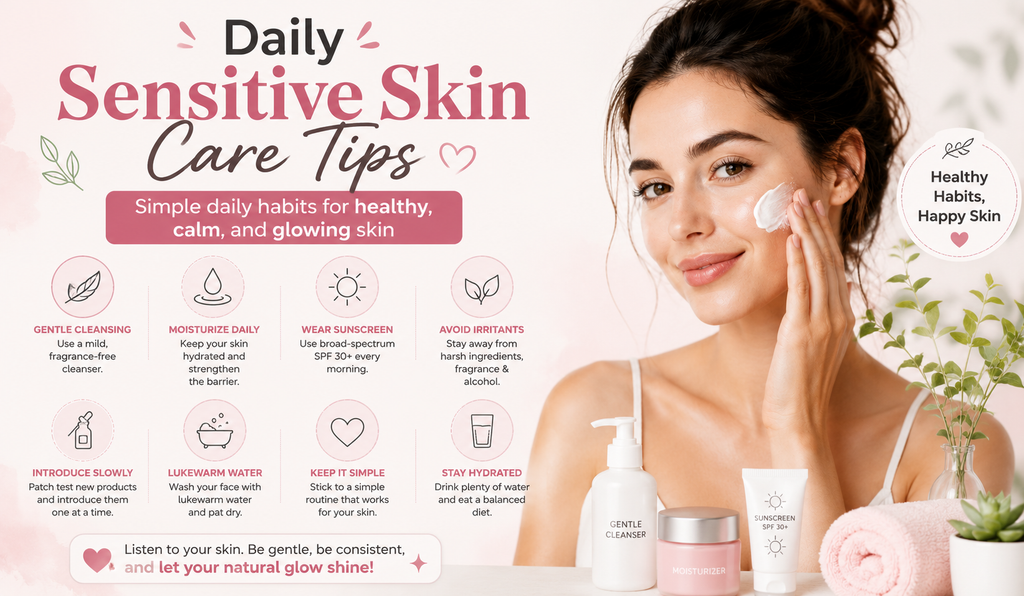
Use a Gentle Cleanser
Choose a mild, fragrance-free cleanser that removes dirt without stripping your skin’s natural oils.
Look for
- Soap-free formulas
- pH-balanced cleansers
- Hydrating ingredients
Moisturize Every Day
A good moisturizer strengthens the skin barrier, and prevents dryness.
Moisturizer should have any of the below combination
- Ceramides
- Hyaluronic acid
- Glycerine
- Squalane
- Colloidal oatmeal
Apply Sunscreen Daily
UV rays can worsen redness, and irritation.
Sunscreen should have any of the below combination
- Broad-spectrum SPF 30, or higher
- Mineral sunscreen with zinc oxide, or titanium dioxide if your skin is easily irritated
Avoid Harsh Ingredients
Sensitive skin often reacts to strong active ingredients.
Ingredients to avoid
- Alcohol-based products
- Artificial fragrances
- Harsh scrubs
- High-strength acids
- Strong retinoids unless advised by a dermatologist
Introduce New Products Slowly
This helps identify, any ingredient that may cause irritation.
Ensure to check as below, before using the new products
- Patch test first
- Use one new product at a time
- Wait several days before adding another product
Wash with Lukewarm Water
Hot water can strip the skin’s natural oils, and increase redness. Use lukewarm water instead, and gently pat your skin dry with a soft towel.
Keep Your Routine Simple
Using too many products can overwhelm sensitive skin.
A basic routine includes
- Gentle cleanser
- Moisturizer
- Sunscreen (morning)
- Gentle night moisturizer
Stay Hydrated
Drinking enough water supports overall skin health, and helps maintain hydration.
Foods to eat
A healthy diet can support your skin barrier.
It Includes
- Fruits rich in Vitamin C
- Leafy green vegetables
- Nuts, and seeds
- Fatty fish rich in Omega-3
- Whole grains
Enough Sleep
- Your skin repairs itself while you sleep
- Aim for 7–9 hours of quality sleep every night
Choosing the best ingredient
These ingredients help soothe, hydrate, and strengthen the skin barrier.
Look for products containing
- Ceramides
- Niacinamide
- Hyaluronic acid
- Aloe vera
- Panthenol
- Glycerine
- Colloidal oatmeal, and Squalane
Ingredients to Avoid
Always read ingredient labels, before buying skincare products
Sensitive skin may react to
- Artificial fragrances
- Alcohol denat
- Harsh sulphates
- Strong exfoliating acids
- High concentrations of essential oils
- Rough physical scrubs
Morning Routine for Sensitive Skin
It includes
- Gentle cleanser
- Hydrating serum
- Moisturizer
- Broad-spectrum sunscreen SPF 30+
Night Routine for Sensitive Skin
It includes
- Gentle cleanser
- Moisturizer
- Barrier-repair cream, if needed
Lifestyle Tips for Healthy, Calm Skin
It includes
- Manage stress through relaxation techniques
- Avoid touching your face frequently
- Wash pillowcases, and makeup brushes regularly
- Protect your skin from extreme weather
- Avoid smoking
- Drink enough water daily
When to See a Dermatologist?
Consult a dermatologist, if you experience
- Persistent redness
- Severe itching
- Painful rashes, and Swelling
- Frequent allergic reactions
- Skins that do not improve with gentle skincare
Early diagnosis can help, identify underlying conditions such as eczema, rosacea, or contact dermatitis.
Frequently Asked Questions (FAQs)
1. What is the best skincare routine for sensitive skin?
A simple routine with a gentle cleanser, moisturizer, and broad-spectrum sunscreen is ideal. Introduce active ingredients slowly, and only if your skin tolerates them.
2. Can sensitive skin use Vitamin C?
Yes, many people with sensitive skin can use Vitamin C, but it’s best to choose a gentle, stable formulation, and patch test before regular use.
3. How can I reduce redness on sensitive skin?
Use fragrance-free products, moisturize regularly, wear sunscreen daily, avoid hot water, and identify personal triggers that worsen irritation.
4. Is exfoliation safe for sensitive skin?
Yes, but it should be done gently, and infrequently. Avoid harsh scrubs, and use mild chemical exfoliants only if recommended for your skin type.
5. Which sunscreen is best for sensitive skin?
A broad-spectrum mineral sunscreen containing zinc oxide, or titanium dioxide is often well tolerated, and helps protect sensitive skin from UV damage.