
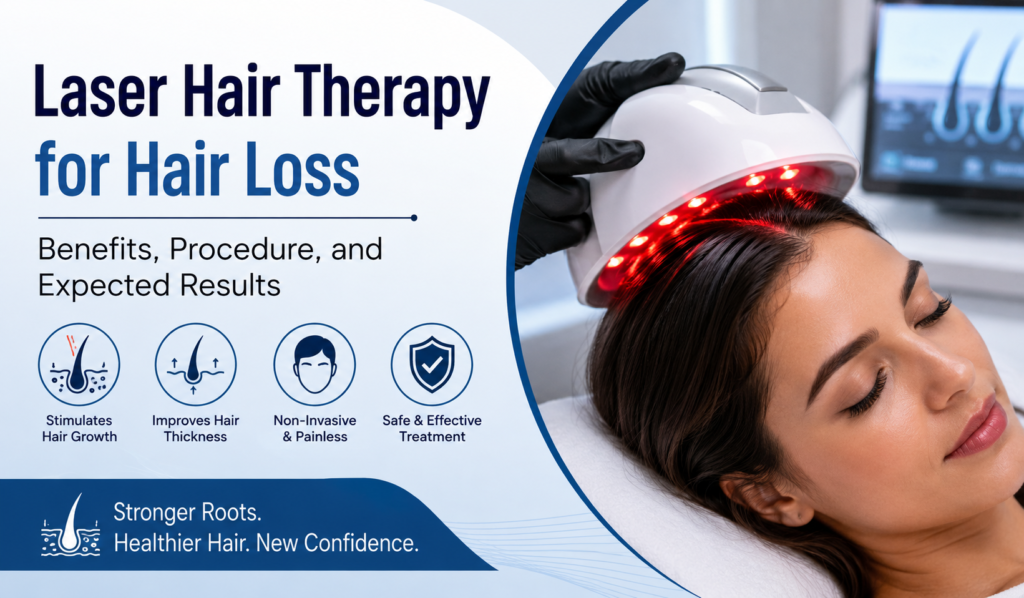

Laser Hair Therapy for Hair Loss – Hair loss is a pretty common worry for men, and women, of basically all ages. It can happen, due to a mix of things like genetics, shifts in hormones, stress, not so great nutrition, and sometimes certain medical conditions. Overall, these factors can lead to strands that thin out over time.
This newer kind of care is usually described as safe, largely painless, and it tends to fit people who are dealing with early to mid-stage hair loss.
In this article, we will break it down, and you will see how laser hair therapy works, what advantages people mention, what the actual procedure looks like, what results you can expect, and also who might benefit from this fresh hair restoration approach.
What Is Laser Hair Therapy?
Laser Hair Therapy, also known as Low-Level Laser Therapy or Cold Laser Therapy, is a clinically proven treatment that uses low-intensity laser light to stimulate hair follicles. The laser energy penetrates the scalp, increasing blood circulation, and encouraging dormant hair follicles to enter the active growth phase.
How Does Laser Hair Therapy Work?
Hair loss occurs when follicles remain in the resting phase for too long.
Hair grows in three stages
It includes
- Anagen
- Catagen
- Telogen
Laser therapy Helps
These effects promote healthier, thicker, and stronger hair growth over time.
It includes
- Stimulating inactive hair follicles
- Improving blood flow to the scalp
- Increasing oxygen, and nutrient supply
- Boosting cellular energy production
- Extending the hair growth phase
- Reducing inflammation around hair follicles
Benefits of Laser Hair Therapy
Laser hair therapy offers some advantages compared to traditional hair loss treatments.
Non-Surgical Treatment
No incisions, stitches, or anaesthesia are required.
Completely Painless
Patients experience a comfortable treatment without discomfort.
Safe for Men, and Women
Laser therapy is effective for both male, and female pattern hair loss.
Stimulates Natural Hair Growth
It activates existing hair follicles instead of replacing them.
Improves Hair Thickness
Hair strands become stronger, and denser with continued treatment.
Minimal Side Effects
Since low-level lasers generate very little heat, side effects are uncommon.
No Recovery Time
Patients can immediately return to work or daily activities after each session.
Can Be Combined with Other Treatments
Laser therapy often provides better results when combined with
- PRP Hair Treatment
- Hair growth medications, and Hair growth supplements
- Scalp treatments
- Healthy diet, and lifestyle changes
Who Is an Ideal Candidate?
It may be less effective for individuals with complete baldness where hair follicles are no longer active.
Laser Hair Therapy is most effective for individuals experiencing
- Early-stage hair thinning
- Male pattern baldness
- Female pattern hair loss
- Stress-related hair shedding
- Age-related hair thinning
- Mild to moderate hair loss
Laser Hair Therapy Procedure
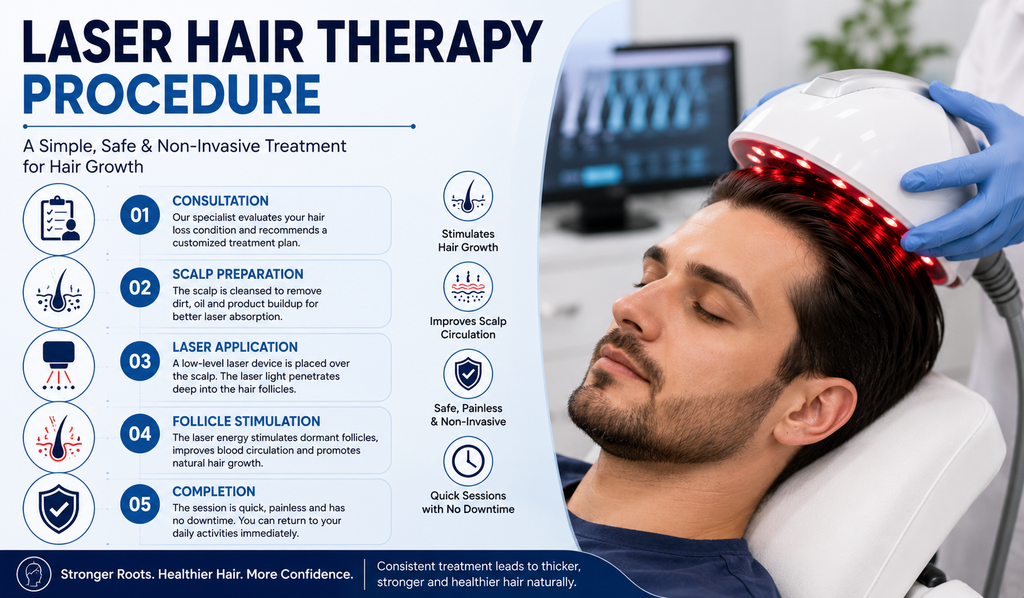
The treatment is simple, and usually takes about 20–30 minutes per session.
Step 1: Consultation
A hair specialist evaluates
- Hair density
- Scalp condition
- Hair loss pattern
- Medical history
- Suitable treatment plan
Step 2: Scalp Preparation
The scalp is cleaned to remove excess oil, dirt, or styling products.
Step 3: Laser Application
A specialized laser device or laser cap is placed over the scalp.
Low-level laser light is evenly distributed across affected areas.
Step 4: Hair Follicle Stimulation
The laser energy penetrates the scalp, and stimulates dormant follicles.
Step 5: Completion
The session ends without pain or recovery time.
Most patients resume normal activities immediately.
How Many Sessions Are Needed?
Treatment plans vary depending on the severity of hair loss.
A typical schedule includes
- 2–3 sessions per week
- Treatment duration of 3–6 months
- Maintenance sessions once or twice per month after improvement
Consistency is essential for achieving optimal results.
Expected Results
Laser Hair Therapy delivers gradual improvements rather than instant changes.
After 1 Month
- Reduced hair shedding
- Improved scalp health
After 2–3 Months
- Stronger hair roots
- Early signs of new hair growth
After 4–6 Months
- Increased hair density
- Thicker hair strands
- Improved scalp coverage
After 6–12 Months
- Noticeably fuller, and healthier hair
- Better overall hair quality
Results vary depending on age, genetics, and the underlying cause of hair loss.
Advantages Over Surgical Hair Restoration
Laser Hair Therapy offers several benefits compared to surgery
- No scars
- No pain
- No hospitalization
- No recovery period
- Lower treatment risk
- Natural-looking results
- Affordable maintenance
Tips to Maximize Results
To achieve the best outcome
- Follow the recommended treatment schedule
- Eat a protein-rich, and balanced diet
- Include iron, zinc, and biotin in your nutrition
- Avoid smoking, and excessive alcohol
- Manage stress through regular exercise or meditation
- Use gentle hair care products
- Avoid excessive heat styling, and harsh chemical treatments
- Stay hydrated, and get adequate sleep,Read more.
Are There Any Side Effects?
Laser Hair Therapy is considered very safe.
Some individuals may experience
- Mild scalp warmth
- Temporary scalp sensitivity
- Slight redness after treatment
These effects are usually mild, and disappear quickly.
Frequently Asked Questions (FAQs)
1. Is Laser Hair Therapy painful?
No. The procedure is completely painless, and does not require anaesthesia.
2. How long does one Laser Hair Therapy session take?
Most sessions last between 20, and 30 minutes.
3. When will I start seeing results?
Many people notice reduced hair shedding within 1–2 months, while visible hair growth usually appears after 3–6 months of regular treatment.
4. Can Laser Hair Therapy regrow hair on completely bald areas?
It is most effective when hair follicles are still active. Completely bald areas with inactive follicles may not respond well.
5. Can Laser Hair Therapy be combined with PRP or hair medications?
Yes. It is commonly combined with PRP therapy, hair growth medications, and nutritional support to improve overall treatment outcomes.