
Healthy, glowing skin isn’t just about appearance. Your skin can reflect your daily habits, skincare routine, sun exposure, sleep quality, and overall lifestyle. While men’s skin may have different characteristics from women’s skin, the basic principles of maintaining healthy skin are surprisingly straightforward.
Many men want to know how to get glowing skin naturally without following a complicated 10-step skincare routine. The good news is that you don’t necessarily need dozens of expensive products. A simple routine built around cleansing, moisturizing, sun protection, and healthy lifestyle habits can help your skin look fresher and healthier.
Whether you’re dealing with dullness, dryness, excess oil, uneven skin tone, or simply want to improve your appearance, here are 10 practical skincare tips for men.
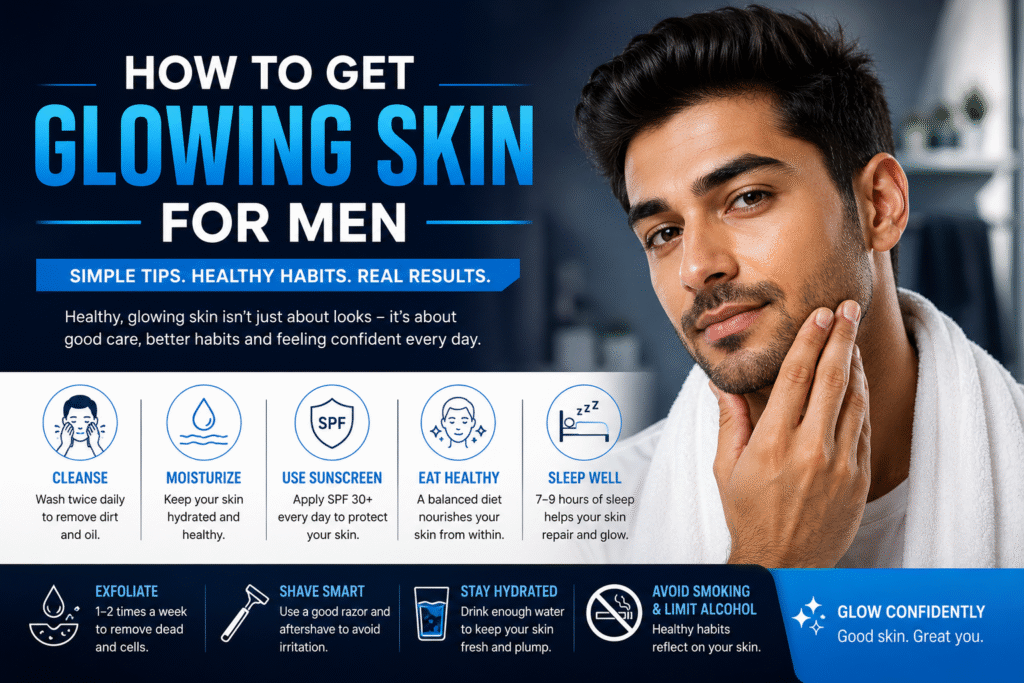
1. Wash Your Face with a Gentle Cleanser
The first step toward healthier-looking skin is keeping your face clean.
Throughout the day, your skin is exposed to sweat, excess oil, pollution, dust, and other impurities. Cleansing helps remove this buildup and prepares your skin for moisturizer and other skincare products.
For most men, washing the face twice a day—once in the morning and again before bed—is a simple routine to follow.
Choose a gentle facial cleanser suitable for your skin type. If you have oily skin, look for a lightweight cleanser designed to remove excess oil without excessively drying the skin. If you have dry or sensitive skin, consider a mild, hydrating cleanser.
Avoid aggressively scrubbing your face. Harsh cleansing can irritate the skin and may damage its natural protective barrier.
2. Moisturize Your Skin Every Day
Moisturizer isn’t only for people with dry skin.
Regular moisturizing can help support the skin barrier and keep your face feeling soft and hydrated. The key is choosing the right type of moisturizer for your skin.
Men with oily or acne-prone skin may prefer a lightweight, oil-free, or non-comedogenic moisturizer. Those with dry skin may benefit from a richer moisturizing cream.
A good time to apply moisturizer is shortly after washing your face.
Consistent hydration can help reduce the appearance of dryness and give the skin a smoother, healthier appearance.
3. Never Skip Sunscreen
If you want healthier-looking skin, sunscreen should be one of the most important products in your morning skincare routine.
Exposure to ultraviolet radiation from the sun can contribute to sunburn, uneven pigmentation, premature skin ageing, and an increased risk of skin cancer.
Apply a broad-spectrum sunscreen with an SPF of at least 30 to exposed skin before going outdoors. Reapplication may be necessary, particularly after sweating, swimming, or spending extended periods outside.
Remember that UV exposure isn’t limited to extremely hot or sunny days.
Making sunscreen a regular habit can help protect your skin and maintain a more even-looking complexion over time.
4. Exfoliate—But Don’t Overdo It
Dead skin cells can accumulate on the skin’s surface and may contribute to a dull or rough appearance.
Gentle exfoliation can help remove some of this buildup. However, more exfoliation doesn’t necessarily mean better skin.
Over-exfoliating can cause redness, dryness, irritation, and sensitivity.
Depending on your skin type and the product you’re using, occasional gentle exfoliation may be sufficient. Always follow the product instructions and stop using it if you experience persistent irritation.
Men who shave regularly should be particularly careful about combining shaving with strong exfoliating products, as both can potentially irritate sensitive skin.
5. Stay Hydrated
Drinking water is important for overall health, although simply drinking large quantities of water isn’t a miracle cure for every skin concern.
Your body’s hydration needs vary depending on factors such as climate, physical activity, and individual health.
Make water part of your daily routine and increase fluid intake appropriately when exercising or spending time in hot weather.
For your skin itself, topical moisturizers also play an important role in maintaining hydration and supporting the skin barrier.
Think of healthy skin as the result of both good skincare and healthy daily habits rather than relying on one quick fix.
6. Eat a Balanced, Nutrient-Rich Diet
Your diet plays an important role in your overall health, including the health of your skin.
Try to include a variety of fruits, vegetables, whole grains, protein sources, and healthy fats in your meals.
Foods containing nutrients such as vitamins, minerals, protein, and essential fatty acids support various functions throughout the body.
Instead of searching for a single “superfood” that promises glowing skin overnight, focus on maintaining a balanced diet consistently.
Reducing excessive consumption of highly processed foods and sugary drinks may also support your broader health goals.
If you have specific nutritional deficiencies or dietary concerns, consult an appropriately qualified healthcare professional rather than relying solely on supplements.
7. Get Enough Quality Sleep
Your face can sometimes reveal when you haven’t been sleeping well.
Insufficient sleep may contribute to a tired appearance and can affect overall well-being.
Most adults should aim for a consistent sleep schedule and sufficient quality sleep based on their individual needs. For many adults, this is around seven to nine hours per night.
Try going to bed and waking up at similar times each day. Limiting late-night screen use and creating a comfortable sleeping environment may also help improve sleep quality.
Good sleep won’t replace skincare, but it can be an important part of a healthy lifestyle.
8. Make Shaving Part of Your Skincare Routine
For many men, shaving is one of the biggest sources of facial skin irritation.
Using a blunt razor, shaving too aggressively, or repeatedly shaving over the same area may contribute to razor burn, irritation, or ingrown hairs.
Before shaving, soften your facial hair with warm water and use an appropriate shaving cream or gel. Use a clean, sharp razor and avoid applying unnecessary pressure.
After shaving, rinse your face gently and apply a suitable moisturizer.
If you frequently experience severe razor bumps or persistent ingrown hairs, consider consulting a dermatologist for personalised advice.
9. Avoid Smoking and Limit Excessive Alcohol
Lifestyle habits can affect both your overall health and the appearance of your skin.
Smoking is associated with numerous serious health risks and can also contribute to premature skin ageing.
Excessive alcohol consumption can affect overall health and may contribute to dehydration and other problems.
Reducing unhealthy habits while focusing on regular exercise, balanced nutrition, adequate sleep, and a consistent skincare routine can support your long-term well-being.
Healthy-looking skin is rarely the result of one product. It’s usually the combination of many small, positive habits.
10. Keep Your Skincare Routine Simple and Consistent
One of the biggest skincare mistakes is constantly switching between products or trying too many active ingredients at once.
You don’t need an overflowing bathroom shelf to maintain a good skincare routine.
For many men, a simple routine is an excellent starting point.
Simple Morning Skincare Routine for Men
- Wash your face with a gentle cleanser.
- Apply a moisturizer suitable for your skin type.
- Apply broad-spectrum SPF 30 or higher sunscreen.
Simple Night Skincare Routine for Men
- Cleanse your face to remove sweat, oil, sunscreen, and impurities.
- Apply moisturizer.
Once you’ve established a basic routine, additional products can be considered for specific concerns. However, ingredients used to address acne, pigmentation, or signs of ageing should be introduced carefully.
If you’re unsure which products are appropriate, a dermatologist can help create a routine based on your individual skin type and concerns.
How Long Does It Take to Get Glowing Skin?
There’s no universal timeline.
Your skin’s appearance depends on many factors, including your skin type, age, existing concerns, lifestyle, environment, and the products you use.
Some improvements in dryness or hydration may become noticeable relatively quickly with appropriate skincare. Concerns such as acne, pigmentation, or uneven skin tone may require considerably more time and targeted treatment.
Consistency is more important than expecting overnight results.
Be cautious of products or treatments promising dramatic “instant” transformations.
When Should You See a Dermatologist?
Basic skincare can help maintain healthy skin, but some conditions require professional evaluation.
Consider consulting a dermatologist if you experience persistent or severe acne, unexplained rashes, significant pigmentation changes, ongoing itching, painful skin conditions, or a skin problem that doesn’t improve.
You should also seek medical advice if you notice a new or changing mole or another unusual skin lesion.
A dermatologist can identify the underlying cause of a skin concern and recommend appropriate treatment.
Final Thoughts: The Secret to Glowing Skin for Men
Getting glowing skin doesn’t require an unnecessarily complicated skincare routine.
Start with the fundamentals: cleanse gently, moisturize regularly, and protect your skin from the sun with SPF 30 or higher. Combine these habits with balanced nutrition, adequate hydration, quality sleep, regular physical activity, and healthier lifestyle choices.
Most importantly, choose skincare products according to your skin type rather than following every social media trend.