
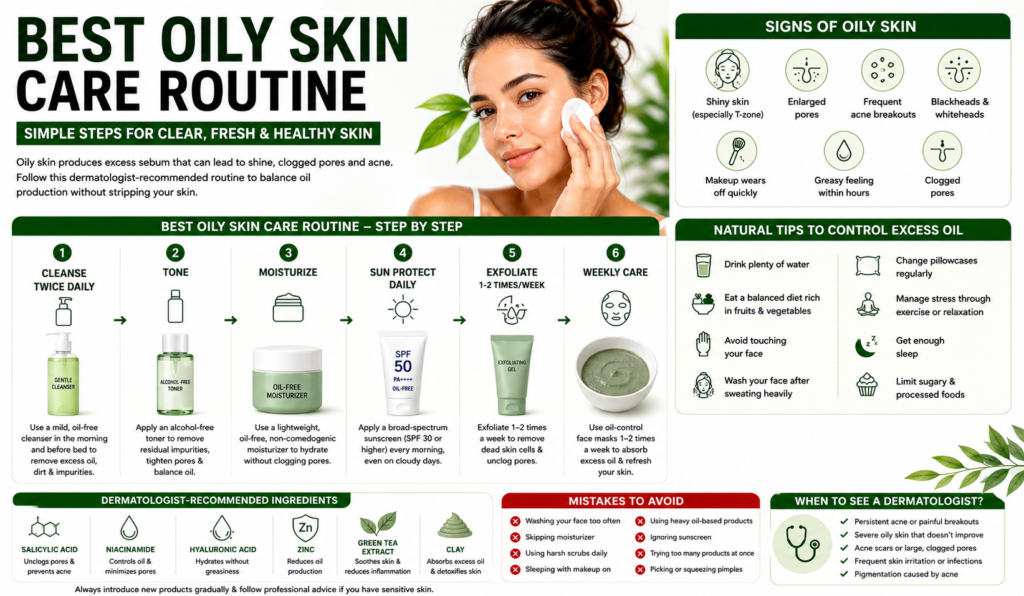

Best Oily Skin Care Routine – Oily skin is one of the most common skin types, and it is sort of categorized by excess sebum— you know, oil production. Sebum, it really does help keep the face moisturized and guarded, but when there’s too much of it, the skin can start looking shiny, with clogged pores and those pesky blackheads, whiteheads, plus acne breakouts.
The good news is that oily skin, can be managed pretty effectively with the right daily skincare routine. and some healthy lifestyle habits. If you stick to a consistent routine, and use products that are recommended by dermatologists, it can help balance oil production without stripping the skin of its natural moisture.
In this article, briefly explained you will learn about the best oily skin care routine, simple natural ways to control excess oil, and also when it makes sense to consult a dermatologist.Read more.
What Causes Oily Skin?
Oily skin grows, when the oily glands produce more sebum than necessary. Some factors can contribute to this condition.
Causes of Oily Skin
It includes
- Genetics
- Hormonal changes
- Hot, and humid weather
- Stress
- Over washing the face
- Using harsh skincare products
- Poor skincare routine
- Heavy or pore-clogging cosmetics
- Certain medications
- Diet, and lifestyle factors
Signs of Oily Skin
If you have oily skin, you may notice the following symptoms
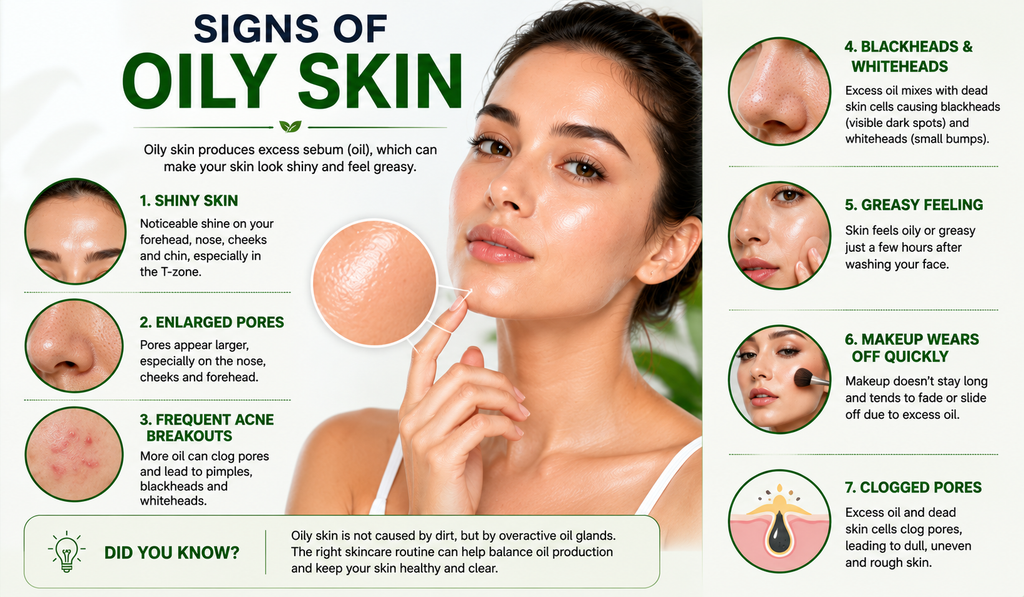
- Shiny face, especially on the forehead, nose, and chin (T-zone)
- Enlarged pores
- Frequent acne breakouts
- Blackheads, and whiteheads
- Makeup wearing off quickly
- Greasy feeling within a few hours of washing your face
- Clogged pores
Finding these signs, can help you select products accurately formulated for oily skin.
Best Oily Skin Care Routine – Cleanse Your Face Twice Daily
Cleansing is sort of the core bit of an effective oily skincare routine. Use a mild, oil-free cleanser every morning, and again before bedtime, to wash away too much oil, grime, perspiration, and other impurities.
Pick a cleanser, that really fits oily or acne-prone skin. Try to stay away from harsh soaps, because they can strip the skin natural barrier and set off even more oil production.
Benefits of Cleanser
- Removes excess oil
- Keeps pores clean
- Reduces acne breakouts
- Refreshes the skin
Apply an Alcohol-Free Toner
A toner helps clean up whatever dirt is left over after cleansing, and it kind of gets your skin ready for that moisturizing step. So go with an alcohol-free toner, and look for ingredients that help with oil balance, without causing any irritation.
These ingredients, can help reduce excess shine while soothing the skin.
- Niacinamide
- Witch hazel (used with caution, if sensitive)
- Green tea extract
- Aloe vera
Use a Lightweight Moisturizer
Many people with oily skin skip moisturizer because they believe it makes the skin oilier. In reality, oily skin still needs hydration.
Choose a lightweight, oil-free, non-comedogenic moisturizer that hydrates without clogging pores.
Benefits Of a Lightweight Moisturizer
- Maintains the skin barrier
- Prevents dehydration
- Helps balance oil production
- Keeps skin smooth, and healthy
Wear Sunscreen Every Day
Sun protection is essential for every skin type, including oily skin. Choose a broad-spectrum sunscreen with SPF 30 or higher that is oil-free, lightweight, and non-comedogenic.
It helps
- Protect against harmful UV rays
- Avoid sun damage
- Reduce pigmentation
- Minimize premature aging
Even on cloudy days or when indoors near windows, sunscreen should be part of your morning routine.
Exfoliate 1–2 Times a Week
Exfoliation helps remove dead skin cells that can clog pores, and contribute to acne. Use a gentle chemical exfoliant or mild scrub suitable for oily skin.
Avoid over-exfoliating, as this can irritate the skin, and increase oil production.
These are the benefits are included
- Smoother skin
- Cleaner pores
- Reduced blackheads
- Brighter complexion
Use Oil-Control Face Masks
A face mask once or twice a week, can help absorb excess oil, and refresh the skin.
These ate the popular ingredients are included
- Clay
- Charcoal
- Multani Miti
- Kaolin clay
These masks can help reduce shine, and leave the skin feeling clean.
Choose Non-Comedogenic Makeup
If you wear makeup, select products labelled oil-free, and non-comedogenic. Remove makeup thoroughly before sleeping to prevent clogged pores, and breakouts.
Clean makeup brushes regularly to reduce the buildup of oil, and bacteria.
Natural Tips to Control Excess Oil
Simple lifestyle habits can complement your skincare routine, and help manage oily skin naturally.
Tips to Control Excess Oil
Healthy daily habits can contribute to clearer, more balanced skin over time.
- Drink plenty of water throughout the day
- Eat a balanced diet rich in fruits, and vegetables
- Reduce sugary, and highly processed foods
- Avoid touching your face frequently
- Change pillowcases regularly
- Manage stress through exercise or relaxation techniques
- Wash your face after sweating heavily
- Get enough sleep every night
Ingredients Recommended by Dermatologists
Best Oily Skin Care Routine – When choosing skincare products, look for ingredients that support oily, and acne-prone skin.
Dermatologist-recommended ingredients
It includes
- Salicylic acid
- Niacinamide
- Hyaluronic acid
- Zinc
- Clay
- Green tea extract
- Retinoids
- Benzoyl peroxide
- Always introduce new products gradually, and follow professional advice if you have sensitive skin
Mistakes to Avoid
Many people mistakenly worsen oily skin by following incorrect skincare practices.
Avoid these common mistakes
- Washing your face too often
- Skipping moisturizer
- Using harsh scrubs daily
- Sleeping with makeup on
- Picking or squeezing pimples
- Using heavy oil-based products
- Ignoring sunscreen
- Trying too many skincare products at once
A simple, consistent routine is often more effective than using multiple products.
When Should You See a Dermatologist?
Consult a dermatologist, if you experience
- Persistent acne
- Painful cystic pimples
- Severe oily skin that doesn’t improve
- Acne scars
- Large, clogged pores
- Frequent skin irritation
- Pigmentation caused by acne
- Recurrent skin infections
Frequently Asked Questions (FAQs)
1. How many times should I wash my face if I have oily skin?
Wash your face twice a day—once in the morning, and once before bed. You can also cleanse after excessive sweating if needed.
2. Should people with oily skin use moisturizer?
Yes. Oily skin still needs hydration. Use a lightweight, oil-free, non-comedogenic moisturizer to maintain a healthy skin barrier.
3. Can oily skin cause acne?
Yes. Excess oil can mix with dead skin cells, and clog pores, increasing the risk of blackheads, whiteheads, and acne breakouts.
4. Which ingredients are best for oily skin?
Ingredients such as salicylic acid, niacinamide, hyaluronic acid, zinc, and clay are commonly recommended for managing oily skin, and reducing excess oil.
5. When should I consult a dermatologist for oily skin?
If you have persistent acne, painful breakouts, acne scars, or excessive oil that doesn’t improve with a regular skincare routine, it’s best to consult a dermatologist for personalized care.